 The blog post “Barking Up The Wrong Tree” suggests having this Post-it Note on your fridge door as a good way of starting the day
Month: April 2014
The Purpose of Marriage
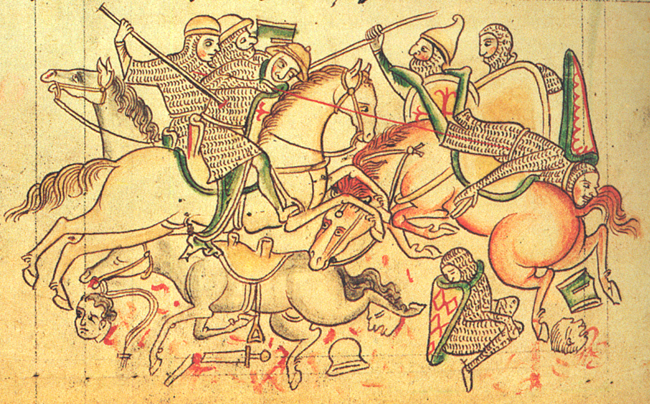
Marriage is nature’s way of keeping us from fighting with strangers. – Alan King
ANZAC Day
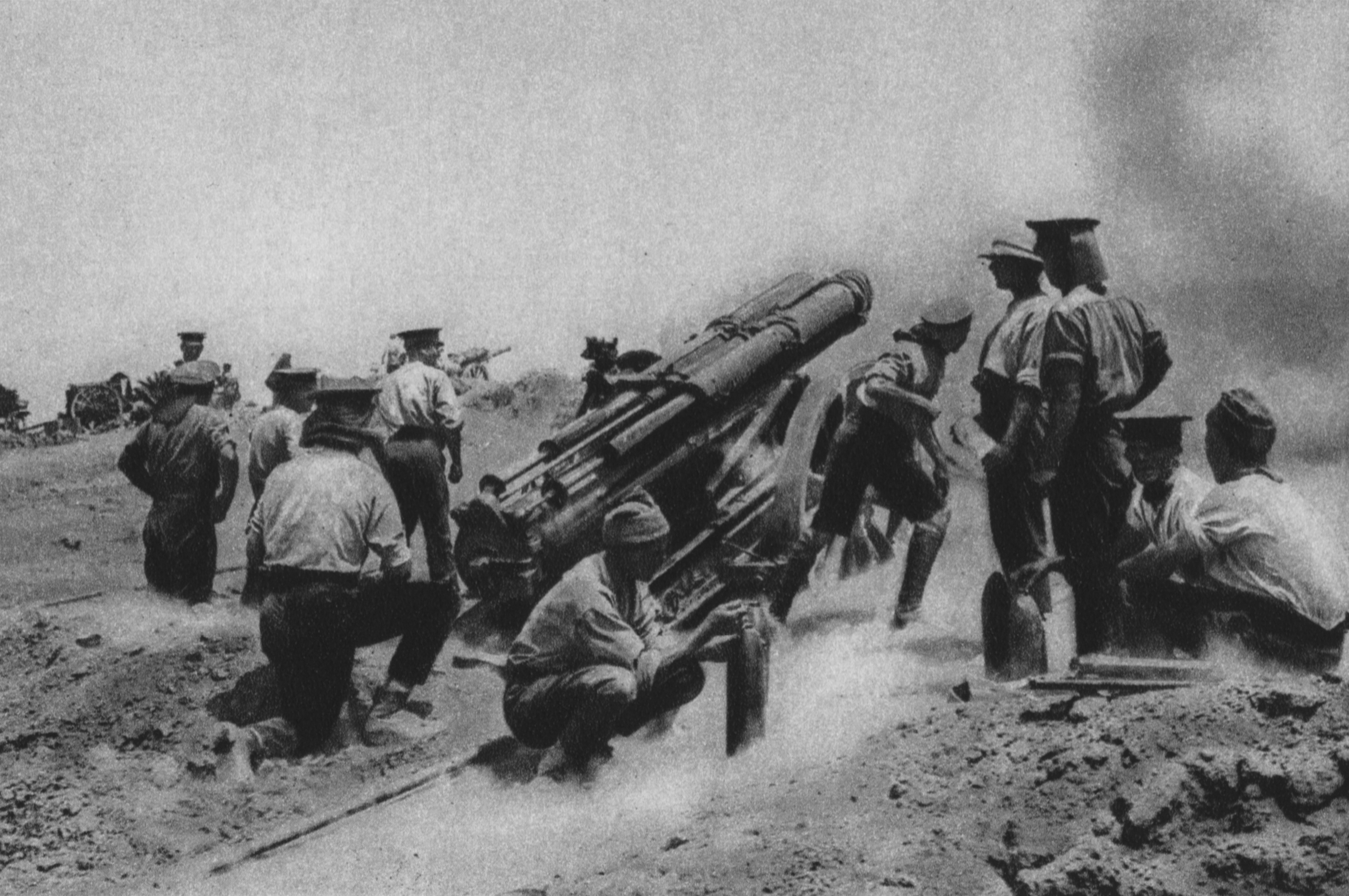 This afternoon I attended an Anzac Day service at St. Mary’s, Hadleigh to commemorate the Australians and New Zealanders “who served and died in all wars, conflicts, and peacekeeping operations” and “the contribution and suffering of all those who have served.
Originally 25th April every year was to honour the members of the Australian and New Zealand Army Corps (ANZAC) who fought at Gallipoli in the Ottoman Empire during World War I. The Gallipoli Campaign also took the lives of fifteen Hadleigh soldiers which added to the poignancy of the occasion. The idea of the campaign was to capture the Gallipoli Peninsula and open the way to the Black Sea for the Allied navies. The Allied forces landed at Gallipoli on 25 April, meeting fierce resistance from the Ottoman Army commanded by Mustafa Kemal (later known as Atatürk). What had been planned as a bold strike to knock the Ottomans out of the war quickly became a stalemate, and the campaign dragged on for eight months. At the end of 1915, the Allied forces were evacuated after both sides had suffered heavy casualties and endured great hardships. In 1934, Kemal Atatürk delivered the following words to the first Australians, New Zealanders and British to visit the Gallipoli battlefields.
“Those heroes that shed their blood and lost their lives. You are now lying in the soil of a friendly country. Therefore rest in peace. There is no difference between the Johnnies and the Mehmets to us where they lie side by side here in this country of ours. You, the mothers, who sent their sons from far away countries, wipe away your tears. Your sons are now lying in our bosom and are in peace, after having lost their lives on this land they have become our sons as well”.
Suffolk Leadership Contest
 My colleague Jenny Antill has written on her blog as follows:
“I feel I should probably write something about last week’s ‘leadership contest’ at the County Council. If nothing else it will serve to record what was for me and my colleagues an important event in the growing chronicle that is represented by this website. It also might clarify one or two things for people confused by the press coverage. Many people of course don’t follow, or care about, the to-ings and fro-ings at Endeavour House (Suffolk County Council’s Headquarters in Ipswich). The majority of Suffolk residents don’t know or care who the Leader of the County Council is, and furthermore don’t know any of the members of his Cabinet. This is not altogether surprising…councils only get onto people’s radar when something goes wrong, and they feel that ‘something should be done about it’ by ‘someone’. So for those of you who are unaware, last week the Conservative Group was obliged to hold a ballot to decide who should continue as our Leader. Since we are the largest party in the Council, this was probably also a decision about who will be the Leader of the Council as a whole. A leadership challenge is always a possibility at all levels of political life….remember Mrs Thatcher’s demise shortly after she had promised to go ‘on and on and on….’? Our contest was brought about by a challenge for the Leader’s position, held by Mark Bee from Waveney from the Cabinet Member for Finance, Colin Noble, who comes from Forest Heath. The fact that the rivals came from different ends of the county led some press commentators to suggest that the reason for the party split was due to some sort of East/West rivalry. I do not think that this lay at heart of the matter. While it is true that many of the supporters of both candidates did come from their respective areas, this was only natural. There are plenty of us in between! At bottom I think that the issue was a conflict between a steady, gradualist approach to policy (Bee) and a more radical and aggressive stance (Noble). Bee, it must be remembered took over after some damage was caused to the council’s reputation by fall out from the dramatic root and branch changes initiated by the colourful former chief executive, Andrea Hill, with the support of the previous leader, Jeremy Pembroke. Three years have passed since that time. Many councillors were only elected a year ago, and some among them, along with more long standing members who understood that not all that was done in the Hill years turned out badly, have perhaps been disappointed by what might be seen as a rather pedestrian, low key approach to the challenges faced by the council today. I will leave it to readers of the blog to decide whether, at a time when the Conservatives have a majority of three rather than the double digit margin enjoyed during the last council, a more cautious, conservative, consensual approach is the appropriate one to adopt. Taking on more risk may prove more politically attractive, and win us more votes in 2017, but it is of course, well….more risky. The key of course is to get the balance right, and this needs constant reappraisal. I do not agree with those who say that the contest was an unnecessary distraction. Although Colin Noble’s challenge did not succeed, the result was thought to be close and the Bee administration will clearly now embrace some positive changes. Political groups need to respond to internal demands for change and debate is healthy. Perhaps however it would have been better to have the discussion, and the at times quite fierce conflict, in a less public manner. Now it is all over, I know we will all get behind Mark Bee, both sides having learned a few useful lessons along the way”.
We are of course all behind Mark Bee. That is the nature of these conflicts – the political equivalent of Schumpeter’s “destructive capitalism”. The voting was thought to be 21-18 which means that a number of people said yes (to both parties) but voted for the other side when push came to shove. Colin Noble is now out of the Cabinet and we wait to see who his replacement will be and whether it represents a nuance in our perceived ways forward.
Jennys’ blog can be found on http://jennyantillsblog.blogspot.co.uk/2014/04/reflections-on-last-weeks-leadership.html?utm_source=feedburner&utm_medium=email&utm_campaign=Feed:+JennyAntillsBlog+(Jenny+Antill’s+blog.
I Fagiolini
 On Monday we went to the Sam Wanamaker Playhouse in London to see “The Boat from Venice to Padua” which featured I Fagiolini in concert. The first part of evening was devoted to a musical comedy in Italian but with the linkage in English. The second half of the evening was devoted to madrigals some tracking Monteverdi’s development. (linking the transition between the heritage of Renaissance polyphony and the basso continuo technique of the Baroque). Apart from the linkages, everything was in Italian and although my Italian is based upon what I have picked up from watching the Montelbano series, I nevertheless could stay with the flow and enjoyed the evening very much. We also dined (quite reasonably) in the Swan Restaurant before the show.
The Globe Theatre is based on the Elizabethan original and the roof of the stage and all galleries are held up by pillars and there is no seat in the theatre from which the action is not obscured at some point. The seats are cushioned but hard. I subsequently discovered that we could hire extra cushions. We got ours (as fish box cushions) from Snowy’s Bait And Tackle, 1-3 Long Bessels in Hadleigh (Tel: 07766 140624).
I Fagiolini have been performing since 1986. At New College, Oxford (the group’s home), their music was known as ‘beany’ music because most of the musicians that seemed to be interested in it (both amateur and professional) seemed to have an alternative lifestyle of knitted yoghurt and wholefood pullovers, living on a diet of nothing but pulses and beans. Stuck for a name at short notice, countertenor Richard Wyn Roberts proposed ‘the beans’; Robert Hollingworth suggested translating this into Italian as the first concert involved Monteverdi and it sounded nicer like that. This worked well until I Fagiolini first went to Italy and discovered the various slang connotations it has there. Different dictionaries tell you that fagiolini are ‘string beans’, ‘French beans’ or ‘little beans’. The last was the one intended.
I Fagiolini’s core repertoire is Renaissance and contemporary solo-voice ensemble repertoire. I’m looking forward to next year when they perform their new show Betrayal”. A Polyphonic Crime Drama based upon the life of Prince Carlo Gesualdo who was one of the more intriguing composers of the late Renaissance. His private life, bizarre behaviour and the planned double-murder of his wife and her lover have added to this allure. It promises to be a site-specific evening of love, intrigue and chilling secrets
Marriage of Figaro
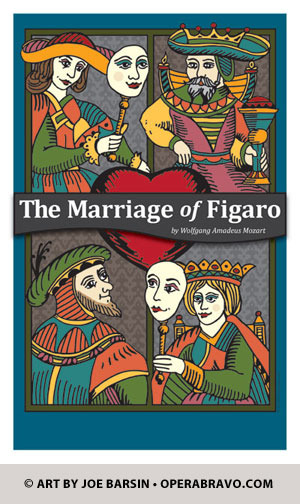 Every now and then, we enjoy a complete surprise. So it was on Sunday when we went to the New Wolsey Theatre to see The Marriage of Figaro. It is an opera full of intrigue and continues the plot of The Barber of Seville several years later, and recounts a single “day of madness” (la folle giornata) in the palace of Count Almaviva near Seville, Spain. Rosina is now the Countess; Dr. Bartolo is seeking revenge against Figaro for thwarting his plans to marry Rosina himself; and Count Almaviva has degenerated from the romantic youth of Barber into a scheming, bullying, skirt-chasing baritone. Having gratefully given Figaro a job as head of his servant-staff, he is now persistently trying to obtain the favours of Figaro’s bride-to-be, Susanna. He keeps finding excuses to delay the civil part of the wedding of his two servants, which is arranged for this very day. Figaro, Susanna, and the Countess conspire to embarrass the Count and expose his scheming. He responds by trying to compel Figaro legally to marry a woman old enough to be his mother, but it turns out at the last minute that she really is his mother. Through Figaro’s and Susanna’s clever manipulations, the Count’s love for his Countess is finally restored. The nine performers were from the Swansea City Opera. It was a fantastic evening. The theatre was full and as far as I am aware no one fell asleep.
 brian riley's blog