It i s rare that I can agree with David Blunkett.
But the following appeared in today’s Daily Mail (http://www.dailymail.co.uk/debate/article-2210945/British-politicians-rarely-ridiculed-despised-worry-all.html#ixzz28ARK0hWB):
“This sense of decay at the heart of democracy is profoundly troubling to me, since I have always had a powerful belief in the political process. … It is 50 years since Professor Bernard Crick’s classic work, In Defence Of Politics, was published. One of his central arguments was that the political process is bound to be messy, full of setbacks, compromises and failures precisely because it is trying to reconcile different opinions and the contradictions of human nature.
That messiness was often the cause for frustration, even despair, Crick admitted, but we should never abandon democracy as a result of it.
His other main argument was that democracy serves as a vital check on the power of market and vested interests. Engagement in politics, he said, was essential to ensure commerce and organisations served the public rather than achieving dominance. Half-a-century later, in our age of mass globalisation, as capital can be shifted across the world at a touch of a button, it’s an argument that’s more relevant than ever.…
It is a fallacy to think we could run our society successfully without elected politicians. How would competing claims for money be reconciled without them? How would tax rates be decided or budgets settled? How would major services be reformed?
The political process provides the only credible, fair way of making such decisions.
The governance of a nation has to take account of myriad other factors, like fairness, compassion, resources, history, timing and public support.
Civic society cannot live by managerialism alone. As the great Welsh Labour politician Aneurin Bevan once said: ‘Politics is the language of priorities.’
And at least politicians are accountable for their actions and can be chucked out if the public does not like them. Yet according to opinion polls, there is a growing belief that our country could do without politicians and could be run by technocrats”.
And perhaps this explains why some of us believe that running a council on the basis of “no overall control” means that someone else or some other people are in control but they are not elected nor are they directly accountable to the electorate.
Political – National and other
Quotation of the Day
Q. Two politicians X & Y (fill in the names according to your disposition) both fall into a river.
You only have one rock, who would you kill?
A: Whoever tries to save them.
Wattisham Flying Station
On e of this week’s fortunate happenings was to be invited to a cocktail party and beating retreat at the Wattisham Flying Station. The last time I was mixing with operational military air crew was in Salalah in 1982. That of course was a different world. The young officers today have done their tours of Afghanistan and finished their Top Gun Training in the U.S. The Army reckons that it costs about £3.5 million to train Apache Helicopter pilots. You get a sense of what a machine the Apache is when it weighs over nine tons fully loaded and can be thrown around the sky at 180 m.p.h. Not that any throwing around is done. These machines cost around £35 million each. The cocktail party was fortunate insofar as Suffolk County Council are initiating a Community Covenant With The Armed Forces. On first reading the Covenant strikes one as being a tad flabby. It is apparently meant as first steps and obviously it cannot be a one size fits all as the various units and communities have different needs. I was in total awe of the personnel whom we met. They are very professional and certainly good value for money. They do deserve our support and one of my ambitions is to make it easier for our veterans to settle in communities of their choice – or as one veteran once put it to me “I can’t go back to where I enlisted. If I become homeless in Camden my wife will divorce me”. We need to work out better ways to support our military.
Beyond Comfort Food
 I was in London and passing through Liverpool Street station and feeling in need of comfort food I stopped by the Pasty Shop and chose a steak and stilton Cornish pasty. It was only as I was walking away that I noticed that in addition to the usual varieties available (lamb with mint, etc.) they also had a pasty filled with fish, chips and mushy peas – all the necessary vital foods for life. Certainly something to put on the list for next time.
In the meantime my favourite council is embarking upon a series of consultations. One of which focuses on the support we give to families with their Council tax and rents. We will be abolishing the discount for second homes (if you can afford a second home you can afford the council tax!) and also we (the taxpayer) will not be paying for houses which have an above average assessment. (Large families would be accommodated by other pockets in the benefits system).
A survey by the Taxpayers Alliance has discovered that super-sized families are being housed by councils across the country in huge mansions that many mortgage payers could only dream of. The biggest council house provided was a 10-bedroom abode in Southwark, while East Riding Council placed a family into a nine-bedroom home in Bridlington. Robert Oxley of the TaxPayers’ Alliance said: “This is why the Government must press ahead with its proposed cap on housing benefits”.
Patience Wheatcroft in Monday’s Evening Standard makes the interesting point that most business people would say that what they want most is for government to provide a stable, low-tax environment, and educated and properly skilled workforce, and then get out of the way. Which I can go along with, provided we have adequate safeguards for people and their environment – otherwise we might just as well start breeding smaller children so as to facilitate chimney sweeping and provide employment.
Tilting at Windmills
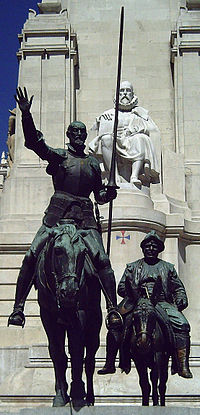 Whilst in Paris we took the opportunity to treat ourselves to the International Herald Tribune which combines the New York Times news services together with features and articles from elsewhere. It made a refreshing change from the U.K. national papers and we did consider swapping our Telegraph subscription for the I.H.T., relying on the internet for more U.K. centred news.
One breakfast meeting was made joyful by the news that Spain is bidding to host the Olympic Games in 2020. A Wall Street Journal article contained the following extracts:
·“We need two different things: power for the economy and an element of enthusiasm for the population,” Víctor Sánchez, managing director of Madrid 2020,
·Skeptics point out that Madrid is among the most indebted cities in Spain. Ratings firm Fitch recently downgraded Madrid’s regional government, predicting its debt could more than triple—to €23.7 billion ($29 billion)—in 2014 from 2010. The country’s economy, meanwhile, is enduring a double-dip recession and the government is pushing through a €65 billion austerity program.
·“This is not the moment to be thinking about this kind of event,” says José García Montalvo, an economics professor at Barcelona’s Universitat Pompeu Fabra.
·”In these bid documents, there is always an element of unreality,” says Matthew Burbank, a political-science professor at the University of Utah who studies the Olympics.
·The IOC gave Madrid the best score of all three finalists, but added: “Careful monitoring of Spain’s progress on economic issues is needed to further assess future risks of delivery.”
It’s good to see optimism combined with ambition in these dark days. On the other hand the lunatics are thinking that they may be in charge of the asylum. The full article may be viewed on:
http://online.wsj.com/article/SB10001424052702303644004577524684025592386.html
Spanish Practices
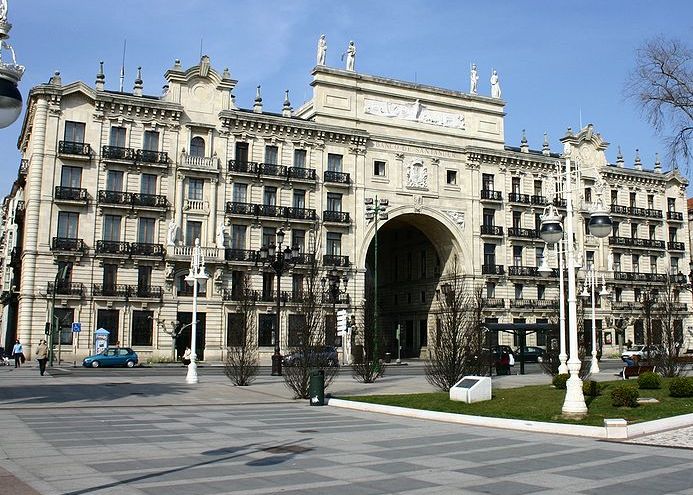 Early in 2010 Babergh District Council decided that it was time that we had a formal Treasury Policy. We had avoided placing surplus funds with the Icelandic banks and it was right that the Council formalised its deposit placing policy. A consultant’s report was commissioned and presented to the Overview & Scrutiny Committee (Stewardship). Strangely it suggested that placing deposits with Spanish banks would meet the Council’s requirements for prudency. There was a fair amount of argument and full Council finally decided that if the Consultant said so, it must be OK! No suggestion that there were other persons on the council who were equally in tune with economic trends and who thought that the Spanish economy was over ripe. Within three weeks of the Council’s decision the Spanish economy was downgraded and any deposit placing with any branch or subsidiary of Santander was prohibited.
Where Babergh leads other Councils follow. The digital version of MJ (presumably an updated name for the Municipal Journal) reports that “Several local authorities are considering whether to deposit money with the British arm of Spain’s biggest bank Santander, amid fears about the weakness of the Spanish economy”.
The full article can be found on http://www.themj.co.uk/MemberPages/Subscribe/article.aspx?id=188729
It’s hard to be humble!
Population is the key
“Population is key . If you don’t take care of population, schools can’t cope, hospitals can’t cope, there’s not enough housing – there’s nothing you can do to have economic development.”
Peter Ogunjuyigbe, a demographer in Nigeria, where women have an average of more than five children. The quote is taken from the New York Times today. However the message is true whether you are talking about Hadleigh, Babergh or the world at large. It’s all about housing, jobs and infrastructure and the driver is population. Otherwise we open the doors to the four horsemen of the Apocalypse.
http://www.nytimes.com/2012/04/15/world/africa/in-nigeria-a-preview-of-an-overcrowded-planet.html?nl=todaysheadlines&emc=edit_th_20120415
Not the Whole Truth
I re cently read “Not the Whole Truth” (1971) the autobiography of Cardinal John Heenan up to the point when he was made Bishop of Leeds in 1951. In many ways it is a book with bits worth skipping. On the other hand he did visit Russia and Germany prior to 1939. (In both cases travelling incognito). An interesting extract relative to the current debates as to whether England is a secular or a religious society is as follows:
“When Mr Butler (1941 President of the Board of Education) began to outline a new education bill (which became the Education Act 1944) it was obvious that the Government intended to give religion a more prominent place in the curriculum. It is impossible to be certain of other people’s motives but I think the politicians were genuinely alarmed by the paganism of Nazi Germany and felt that the British as Christian crusaders should teach young citizens more about Christianity…That is why in the new Act it was proposed to include a daily act of worship and an agreed (non-denominational) syllabus of religious instruction.”
RBS , Stephen Hester, Bonus & Prospects
 Last week’s Money Week contained an interesting take on Stephen Hester (CEO of RBS), his bonus and the prospects for RBS. The whole article (by Matthew Lynn) makes a great deal of sense as the following extract indicates:
The only realistic option (for RBS) is a radical break up. The investment banking business should be stripped out and each unit sold for whatever anyone is willing to pay. Any units that can’t be sold should be handed over for nothing to the staff: let them sink or swim as partnerships.
After that, split up NatWest and RBS into two separate retail banking chains, and sell both – and if they won’t sell, float them as independent companies. The British banking industry could use more competition, having two brands under the same corporate roof doesn’t make sense. Taxpayers will probably never get their £45bn back. But something could be salvaged from the mess.
A million pounds would be cheap for a CEO with a strategy that could sort out RBS. But for one whose strategy looks less and less convincing by the week, it would have been a criminal waste of money.
The route to this opinion can be found on http://www.moneyweek.com/news-and-charts/economics/uk/bonus-bargain-for-a-star-ceo-at-rbs-stephen-hester-57418
Some years ago I was attempting a M.A. in Business and my thesis was focussed on corporate governance. My first chapter drew on the contradiction between the cost of bankers (considered to be too high) and the cost of footballers (all-in-all considered to be value for money as the market corrects itself very quickly and everyone can understand the numbers of goals scored, games won and so on). Based on the above and on what we have seen so far, Stephen Heston needs to be a goal scorer or else given the opportunity to seek new pastures elsewhere.
O Tempera O Mores
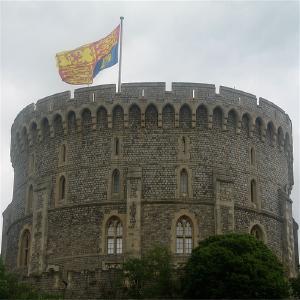 This afternoon Alice (described on the invitation as my consort) & I went to St. Mary’s, Hadleigh for a service of celebration to mark the Queen’s accession to the throne some sixty years ago.
And very nice it was. The ushers weren’t sure whether we qualified for the second row from the front but in the end decided that we were. (The lady with the list not being “on seat” at the required time ”.
It was a well thought out service with something to appeal to everyone. Traditionalists got an articulation of the Privy Council’s accession declaration and the modernists got “You are My Sunshine” by a group of schoolchildren. We sang two verses of the National Anthem. Usually we only sing the first verse. The thought occurred to me that even with two verses Her Maj was being short changed and that we were being prevented from wishing a dissing on the Scots and other foreigners whose knavish tricks required confounding. But only two verses are shown on the web site http://www.royal.gov.uk/MonarchUK/Symbols/NationalAnthem.aspx
Further research (http://ingeb.org/songs/godsaveo.htm) shows that there were six verses and two of the more interesting and sadly now ignored ones are as follows:
O Lord our God arise,
Scatter her enemies And make them fall;
Confound their politics,
Frustrate their knavish tricks,
On Thee our hopes we fix,
God save us all!
Lord grant that Marshal Wade*
May by thy mighty aid Victory bring.
May he sedition hush,
And like a torrent rush,
Rebellious Scots to crush.
God save the King!
*Wade was involved in the suppression of the Jacobite Risings of 1715 and 1745.
 brian riley's blog