 MindJet is a planning software company, probably best known for MindMaps which I often use for event and other planning. Their blog http://blog.mindjet.com/2012/05/between-fluffy-and-rover-cat-people-vs-dog-people discusses personal styles of analysis, planning and problem solving based on the characteristics of dogs and cats. The following is an extract from their blog There are clear personality differences between the species that, in turn, attract different types of owners (or guardians, to use a more pet-centric locution).
Both in the wild and at home, cats are solitary creatures most active at dawn and dusk. During the day, cats often seem indifferent to your presence. While cats enjoy playing with their owners or with other cats, their interest is often limited. Cats are aloof creatures who enjoy their personal space and dislike orders. Many will look at you with condescending pity if you command them to “sit” or “lie down.” Many—but certainly not all—cat owners are predisposed to solitary, intellectual pursuits that require a minimal amount of human interaction. At work, cat owners may prefer closed-door offices and minimal interruptions Dogs, like their wild canine ancestors, are sociable pack animals. Without daily walks, hour-long stick throwing-and-retrieving sessions and ample belly-rubbing, dogs will become surly, morose and prone to dig out your flower bed. Still, there is always a quiet dignity about dogs and an admirable sense of loyalty, which is why they are often referred to as “man’s best friend.” Many dog owners are social individuals who value time spent amongst their friends and peers. At work, they may prefer open office spaces with plenty of room for interaction and group projects. On the weekend, they may escape the confines of the city for the wild open spaces of the country. Dog people are often described as jocular, engaging and outgoing, and not at all opposed to being scratched behind the ear.
Uncategorized
Rain & Floods
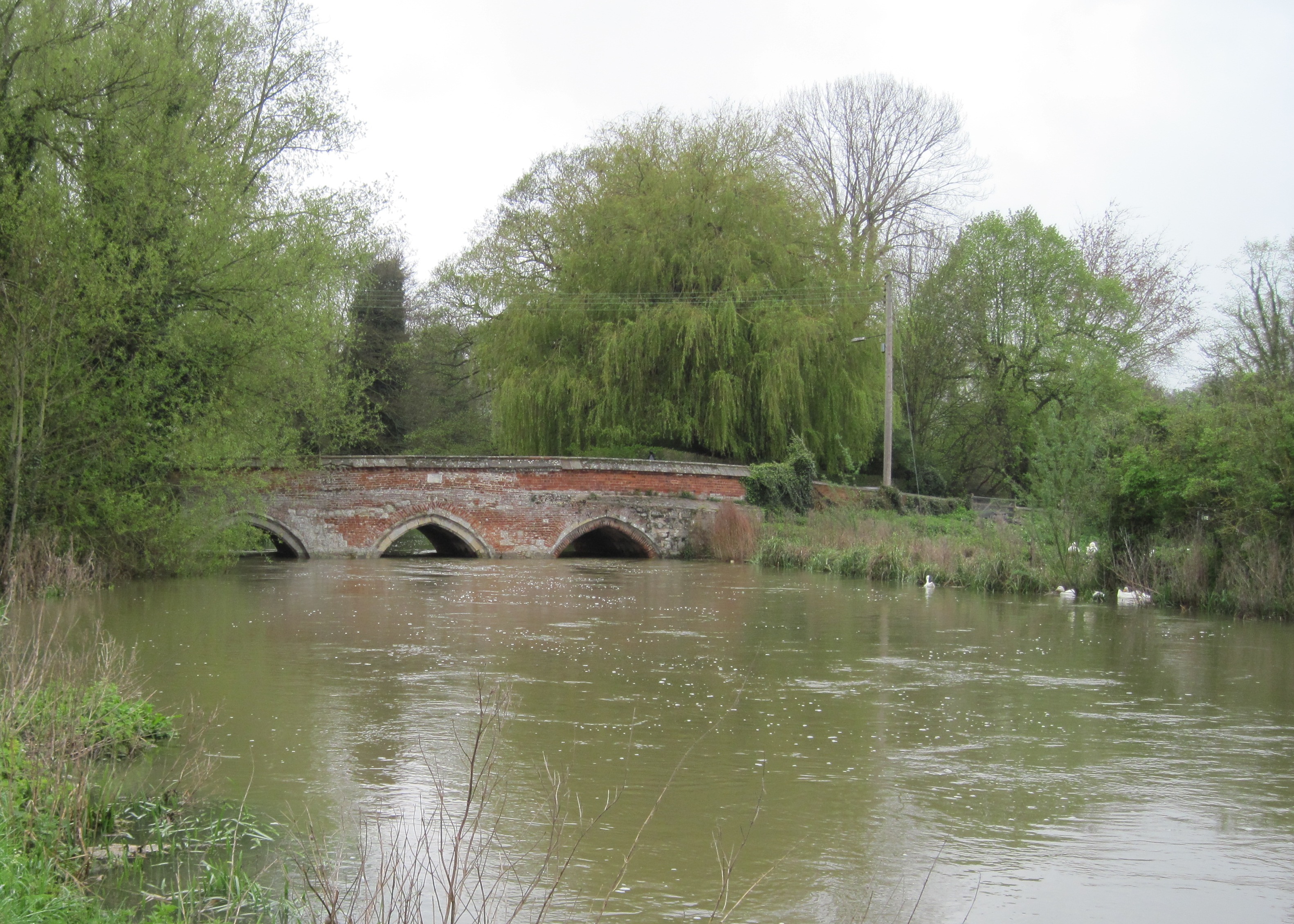

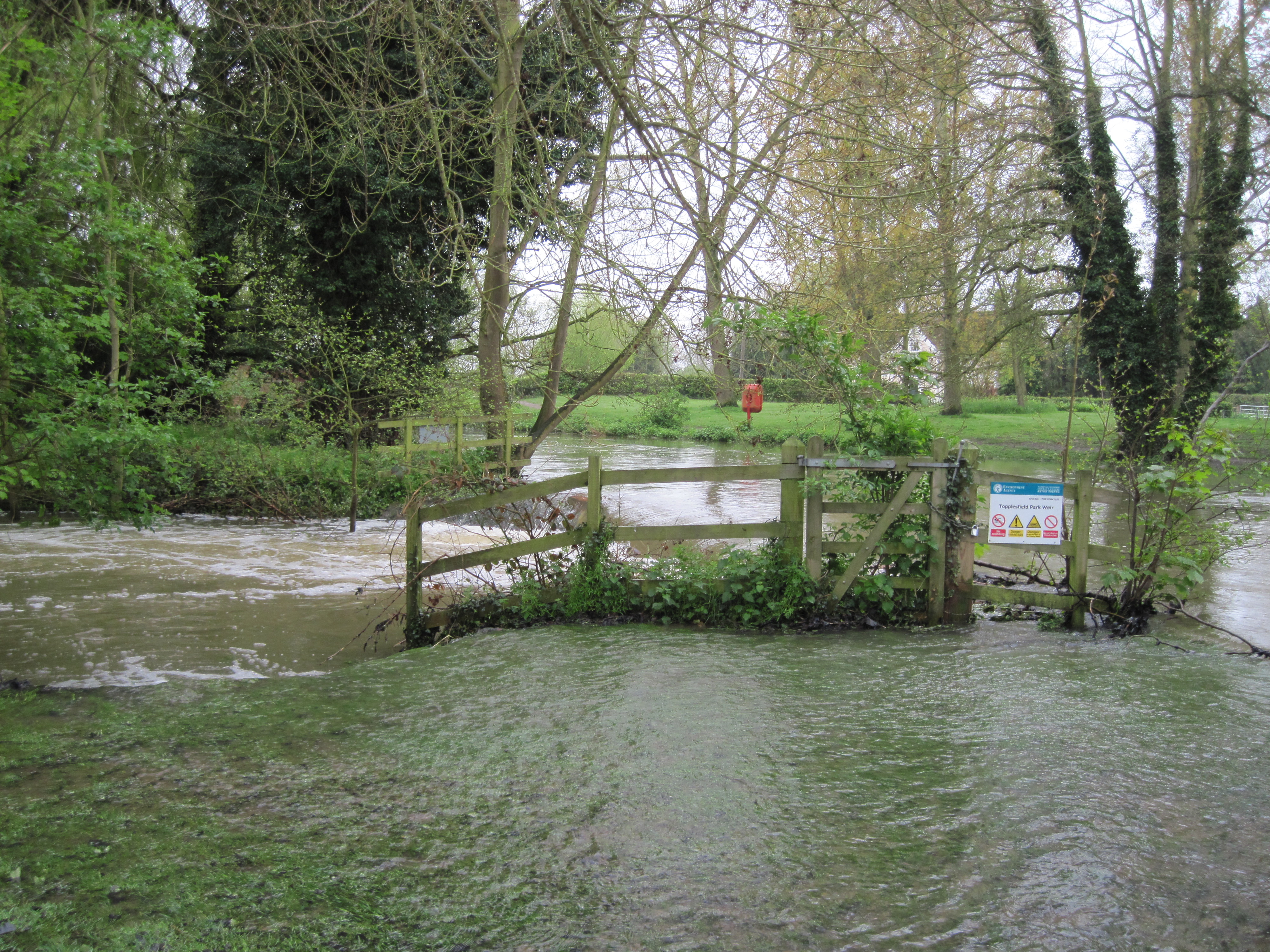 Thursday was quite heavy with rain. The River Brett overflowed its banks at various places around Hadleigh. By Friday the waters were still fast flowing but had abated a bit. The photo’s were all taken around 11 a.m.
Monetary Trends
 Moneyweek is as the name suggests a weekly magazine looking at money trends.
Its contributors include gold bugs, bond fanciers and equity analysers.
The 24th February edition (I’m a slow reader!) contained the following three contributions:
My money goes on Tim Price (the third contributor) especially for his last sentence:
Simon Caulfield wrote:
James Grant, publisher of Grant Interest Rate Observer, likens inflation to tomato ketchup. You can shake the bottle for ages and nothing happens. Then suddenly, your dinner is drowning in the stuff. My advice? Own investments that gain from a weaker pound and rising inflation – and buy Asian currencies and gold.
http://www.moneyweek.com/news-and-charts/economics/global/what-if-this-is-not-a-financial-crisis-57740
Matthew Lynn wrote:
Countries with low debts are more stable – just as companies and households with lower debts are. With balance sheets in decent shape, they are better placed to withstand fluctuations in the economic cycle. Nearly all the low debt countries are emerging markets. Slowly investors are realising what is happening. Emerging markets offer greater security and now higher yields. With younger populations, smaller governments, less welfare and lower taxes, they grow faster. Increasingly, the question may well be not how much money you want to have in the emerging markets – but why leave any at all in the developed world?
http://www.moneyweek.com/investments/stock-markets/universal-truths-of-investment-turned-upside-down-57718
Tim Price wrote:
Whenever the market anticipates yet more quantitative easing, markets go risk-on. Whenever the market fears the withdrawal of quantitative easing, markets go risk-off. And governments and their central banks are either pumping the accelerator or toying with the brakes. If, like me, you fundamentally fear money-printing, hold gold. If you think the printing will stop, hold quality bonds. Depending on your views of China, it may make sense to hold (or completely avoid) commodities, and in most circumstances it makes sense to own quality blue-chip stocks. But if you can foresee what lies ahead, you’re a better man than I am.
http://www.moneyweek.com/investment-advice/how-to-invest/strategies/investing-in-an-age-of-monetary-anarchy-57726
The above commentary is for general information only and is not intended to be relied upon by individual readers in making (or not making) specific investment decisions. Appropriate independent advice should be obtained before making any such decision. Always seek personal advice if you are unsure about the suitability of any investment.
Edelweiss
 Roger Lewis wrote in the Telegraph on the 16th February 2012:
The popularity of The Sound of Music occasioned one of the prime moments of my childhood. “You remind me of that song in it,” my mother said to my father one day. “What, My Favourite Things?” he replied smilingly. “No,” said Barbara Mary Lewis (née George), “Idleswine.”
RBS , Stephen Hester, Bonus & Prospects
 Last week’s Money Week contained an interesting take on Stephen Hester (CEO of RBS), his bonus and the prospects for RBS. The whole article (by Matthew Lynn) makes a great deal of sense as the following extract indicates:
The only realistic option (for RBS) is a radical break up. The investment banking business should be stripped out and each unit sold for whatever anyone is willing to pay. Any units that can’t be sold should be handed over for nothing to the staff: let them sink or swim as partnerships.
After that, split up NatWest and RBS into two separate retail banking chains, and sell both – and if they won’t sell, float them as independent companies. The British banking industry could use more competition, having two brands under the same corporate roof doesn’t make sense. Taxpayers will probably never get their £45bn back. But something could be salvaged from the mess.
A million pounds would be cheap for a CEO with a strategy that could sort out RBS. But for one whose strategy looks less and less convincing by the week, it would have been a criminal waste of money.
The route to this opinion can be found on http://www.moneyweek.com/news-and-charts/economics/uk/bonus-bargain-for-a-star-ceo-at-rbs-stephen-hester-57418
Some years ago I was attempting a M.A. in Business and my thesis was focussed on corporate governance. My first chapter drew on the contradiction between the cost of bankers (considered to be too high) and the cost of footballers (all-in-all considered to be value for money as the market corrects itself very quickly and everyone can understand the numbers of goals scored, games won and so on). Based on the above and on what we have seen so far, Stephen Heston needs to be a goal scorer or else given the opportunity to seek new pastures elsewhere.
O Tempera O Mores
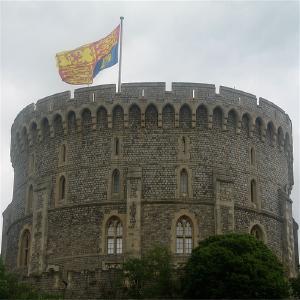 This afternoon Alice (described on the invitation as my consort) & I went to St. Mary’s, Hadleigh for a service of celebration to mark the Queen’s accession to the throne some sixty years ago.
And very nice it was. The ushers weren’t sure whether we qualified for the second row from the front but in the end decided that we were. (The lady with the list not being “on seat” at the required time ”.
It was a well thought out service with something to appeal to everyone. Traditionalists got an articulation of the Privy Council’s accession declaration and the modernists got “You are My Sunshine” by a group of schoolchildren. We sang two verses of the National Anthem. Usually we only sing the first verse. The thought occurred to me that even with two verses Her Maj was being short changed and that we were being prevented from wishing a dissing on the Scots and other foreigners whose knavish tricks required confounding. But only two verses are shown on the web site http://www.royal.gov.uk/MonarchUK/Symbols/NationalAnthem.aspx
Further research (http://ingeb.org/songs/godsaveo.htm) shows that there were six verses and two of the more interesting and sadly now ignored ones are as follows:
O Lord our God arise,
Scatter her enemies And make them fall;
Confound their politics,
Frustrate their knavish tricks,
On Thee our hopes we fix,
God save us all!
Lord grant that Marshal Wade*
May by thy mighty aid Victory bring.
May he sedition hush,
And like a torrent rush,
Rebellious Scots to crush.
God save the King!
*Wade was involved in the suppression of the Jacobite Risings of 1715 and 1745.
Bye-Bye Increased Short Term Parking Charges
 At this morning’s (26th Jan 2012) Council meeting, Babergh decided to:
Retain free parking for up to three hours in Sudbury and Hadleigh but there being an increase in the long-stay charge from £1.50 to £2 per day.
Increase Council Tax by 9 pence per week per Band D property being the equivalent of 3.5% on the District Council’s levy.
Keep Community Grants (about £290,000) as they are pending a full strategic review in 2012/13.
Review charges and arrangements for brown bin collection, public toilets etc.
All of which is a bland way of reflecting the pulling together of a group of like minded councillors and ensuring that their views prevailed.
However a triumph is a triumph – hard sought, hard fought and well won.
Tesco still wants a new store in town
 The EADT reported on the 7th: A Supermarket giant will not challenge a decision to refuse it permission to build a new store in Hadleigh, the EADT can reveal. Tesco had been widely expected to appeal after Babergh councillors expressed concern over whether their grounds for refusal were strong enough. But with the deadline looming for challenging the July decision, Tesco said it would instead return to the drawing board to come up with a better design. It means the long-running saga will rumble on for some time yet despite the supermarket chain expressing hope it will have new designs ready by the end of the year. A spokeswoman for Tesco said: “We’d like to build a supermarket that is acceptable to the council and local people and therefore we will not be lodging an appeal. “We are now working on a different design and look forward to consulting the council and the local community in due course, on how we can improve this. “We have appointed some expert designers – a range of them – to come up with some ideas and we have started putting together some draft plans. “These independent experts will tell us whether they think it is compatible with the heritage and feel of Hadleigh. “We don’t want it to stall any longer, it’s been a long process already. But we don’t want to rush things and make another mistake.” Tesco’s plans for a 2,500 sq metre store on the former Brett Works site were narrowly rejected in July, despite Babergh District Council planning officers recommending approval. Planning members refused the proposals because of the store’s design after being told concerns over its impact on traffic and independent stores were not valid reasons for rejection. Brian Haylock, owner of independent bookshop The Idler, said: “If they put in a design like the Taj Mahal we could say we don’t like it. But I don’t suppose we’ll do that, I fear Tesco will get their way. “I think it would change the whole nature of the town, which at the moment is a typical thriving British town. “We shall go on fighting it, we’re not going to give in. “But it does look disheartening sometimes especially when our objections are dismissed, such as those about the effects a Tesco will have on trade. “I still feel the same about Tesco – I can’t accept them coming into the town. There are very persistent and I suppose we should be on our guard against them.” http://www.eadt.co.uk/news/hadleigh_tesco_still_wants_a_new_store_in_town_1_1171186
So we continue to live and fight another day.
It makes the Paris Bourse look like a parish council
An open letter to German Chancellor Angela Merkel (Published in the Express – see below for a link to the original and the comments).
Tuesday December 13,2011
By Frederick Forsyth Dear Madame Chancellor,
Permit me to begin this letter with a brief description of my knowledge of, and affection for, your country.
I first came to Germany as a boy student aged 13 in 1952, two years before you were born. After three extended vacations with German families who spoke no English. I found at the age of 16, and to my pleasure, that I could pass for German among Germans.In my 20s I was posted as a foreign correspondent to East Germany. in 1963, when you would have been a schoolgirl, just north of East Berlin where I lived.
I know Germany, Frau Merkel, from the alleys of Hamburg to the spires of Dresden, from the Rhine to the Oder, from the bleak Baltic coast to the snows of the Bavarian Alps I say this only to show you that I am neither ignoramus nor enemy.
I also had occasion in those years to visit the many thousands of my countrymen who held the line of the Elbe against 50,000 Soviet main battle tanks and thus kept Germany free to recover, modernise and prosper at no defence cost to herself. And from inside the Cold War I saw our decades of effort to defeat the Soviet empire and set your East Germany free.
I was therefore disappointed last Friday to see you take the part of a small and vindictive Frenchman in what can only be seen as a targeted attack on the land of my fathers.
We both know that every country has at least one aspect of its society or economy that is so crucial, so vital that it simply cannot be conceded. For Germany it is surely your automotive sector, your car industry. Any foreign-sourced measure to target German cars and render them unsaleable would have to be opposed to veto point by a German chancellor.
For France it is the agricultural sector. For more than 50 years members of the EU have been taxed under the terms of the Common Agricultural Policy in order to subsidise France ‘s agriculture. Indeed, the CAP has been the cornerstone of every EU budget since the first day. Attack it and France fights back.
 For us the crucial corner of our economy is the financial services industry. Although parts of it exist all over the country it is concentrated in that part of London known, even internationally, as “The City”.It is not just a few greedy bankers; we both have those, but the City is far more. It is indeed a vast banking agglomeration of more banks than anywhere else in the world.
But that is the tip of the iceberg. Also in the City is the world’s greatest concentration of insurance companies. Add to that the brokers, traders in stocks and shares worldwide, second only, and then maybe not, to Wall Street. But it is not just stocks. The City is also home to the exchanges of gold and precious metals, diamonds, base metals, commodities, futures, derivatives, coffee, cocoa… the list goes on and on. And it does not yet touch upon shipping, aviation, fuels, energy, textiles… enough.
Suffice to say the City is the biggest and busiest marketplace in the world. It makes the Paris Bourse look like a parish council set against the United Nations and even dwarfs your Frankfurt many times.
That, surely, is the point of what happened in Brussels. The French wish to wreck it and you seem to have agreed. Its contribution to the British economy is not simply useful nor even merely valuable. It is absolutely crucial. The financial services industry contributes 10 per cent of our Gross Domestic Product and 17.5 per cent of our taxation revenue. A direct and targeted attack on the City is an attack on my country. But that, although devised in Paris, is what you have chosen to support. You seem to have decided that Britain is once again Germany’s enemy, a situation that has not existed since 1945. I deeply regret this but the choice was yours and entirely yours. The Transaction Tax or Tobin Tax, you reserve the right to impose, would not even generate money for Brussels. It would simply lead to massive emigration from London to other havens. Long ago it was necessary to live in a city to trade in it. In the days when deals can flash across the world in a nano-second all a major brokerage needs is a suite of rooms, computers, telephones and the talent of the young people barking offers and agreements down the phone. Such a suite of rooms could be in Berne, Thun, Zurich or even Singapore. Under your Tobin Tax tens of thousands would leave London. This would not help Brussels, it would simply help destroy the British economy. Your conference did not even save the Euro. Permit me a few home truths about it.
The euro is a Franco-German construct. It was a German chancellor (Kohl) who ordered a German banker (Karl Otto Pohl) to get together with a French civil servant (Delors) on the orders of a French president (Mitterrand) and create a common currency. Which they did. It was a flawed construct. Like a ship with a twisted hull it might float in calm water but if it ever hit a force eight it would probably founder. Even then it might have worked for it was launched with a manual of rules, the Growth And Stability Pact. If the terms of that book of rules had been complied with the Good Ship Euro might have survived. But compliance was entrusted to the European Central Bank which catastrophically failed to insist on that compliance. Rules governing the growing of cucumbers are more zealously enforced. This was an European Bank in a German city under a French president and it failed in its primary, even its sole, duty. This had everything to do with France and Germany and nothing whatever to do with Britain. Yet in Brussels last week the EU pack seemed intent only on venting its spleen on the country that wisely refused to abolish its pound. You did not even address yourselves to saving the Euro but only to seeking a way to ensure it might work in some future time. But the Euro will not be saved. It is crumbling now. And since you have now turned against my country, from this side of the Channel, Madame Chancellor, one can only say of the euro: YOU MADE IT, YOU MEND IT.
The full article (and the comments) may be found on http://www.express.co.uk/ourcomments/view/289553/Frederick-ForsythAn-open-letter-to-German-Chancellor-Angela-MerkelAn-open-letter-to-German-Chancellor-Angela-MerkelAn-open-letter-to-German-Chancellor-Angela-Merkel
Season Of Mists And Mellow Fruitfulness
 The leaves are falling off the trees but the weather is still mild. Nevertheless last week we tried out the logs and open fire. The production went well until the fire was well lit when the room filled
  up with smoke. I spent two hours with the window open trying to improve the draw and waiting for the smoke to clear. Even so the room still smells like a kipperie.Can roasted chestnuts by an open fire be far away?
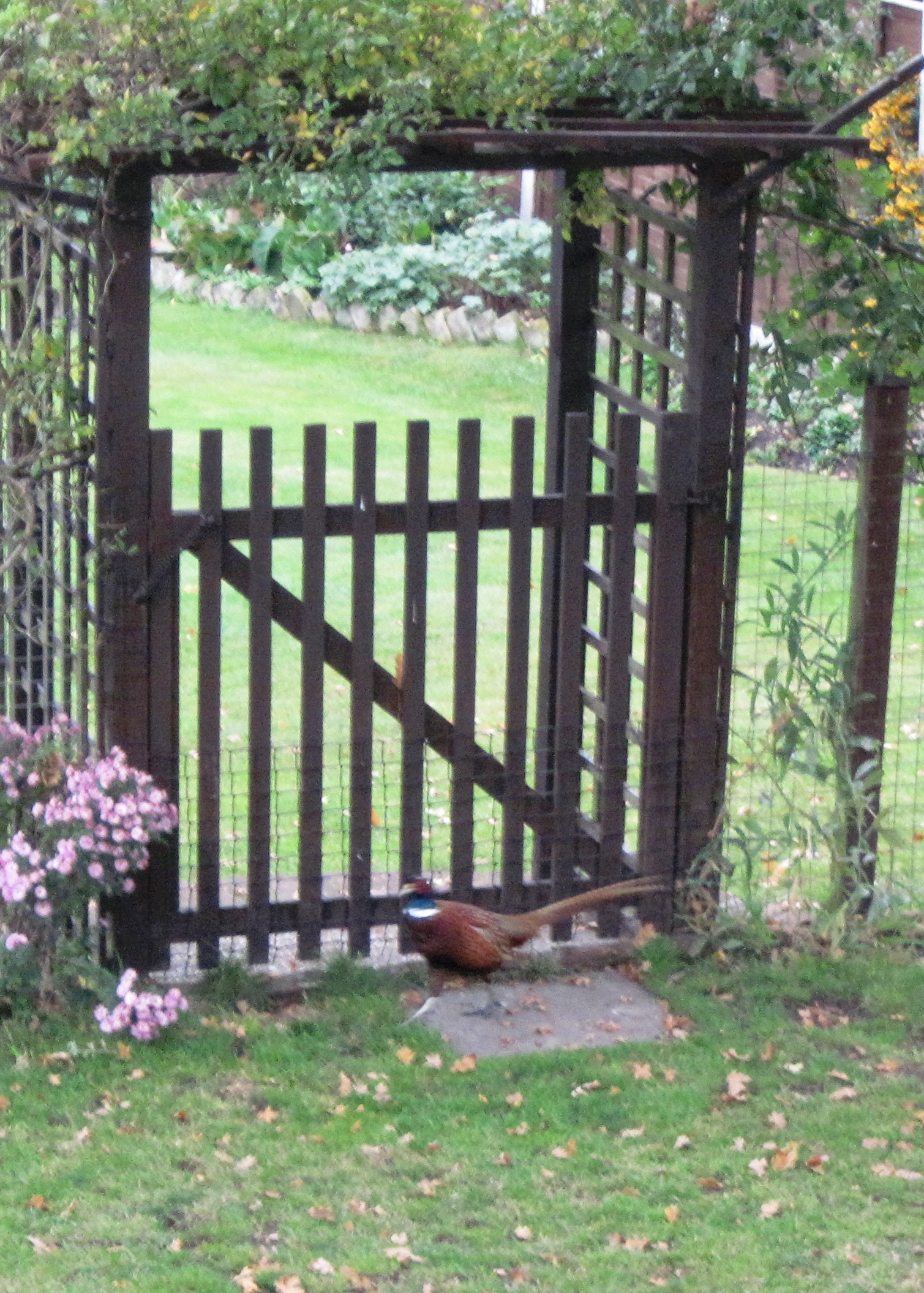
Meanwhile today’s visitors included this male pheasant who dropped in and only left when I called out “bread sauce”.
 brian riley's blog