 My clients and customers know that I have little time for real estate decorating fads imposed willy-nilly on peoples’ houses without regard to the unique selling points of the property to be sold. Of course, houses and apartments need to be clean, uncluttered and welcoming. But are you selling into a lifestyle or are you selling a commodity where it needs to stand out on a value for money basis?
This weekend my reading included an article in the London Sunday Times espousing the philosophy of Ellie Rees, creative director of Brickworks, an estate agency based in north London. Her views on property decoration include “You need to think about the demographic of the person who’s likely to buy your property, and make it as appealing as possible to them. It’s not about being neutral. It’s about being quite bold and stylish, but knowing what that style should be. How grown-up? How family? How couply?”
Photography is key to getting buyers to book viewings.
“It’s that ‘property porn’ thing we have become so culturally obsessed with. Great photos mean more people click on the property on the internet, which means you’ll get more viewings and, hopefully, the best possible selling price.”
The full article can be found on https://www.thetimes.co.uk/article/before-and-after-home-staging-an-insiders-guide-to-selling-your-property-tgxmgkfcr
At Weichert I have access to professionals who have their feet planted firmly on the ground. I can put you in touch with decorators and photographers whatever the real estate need.
Money Matters
Winterizing the Home
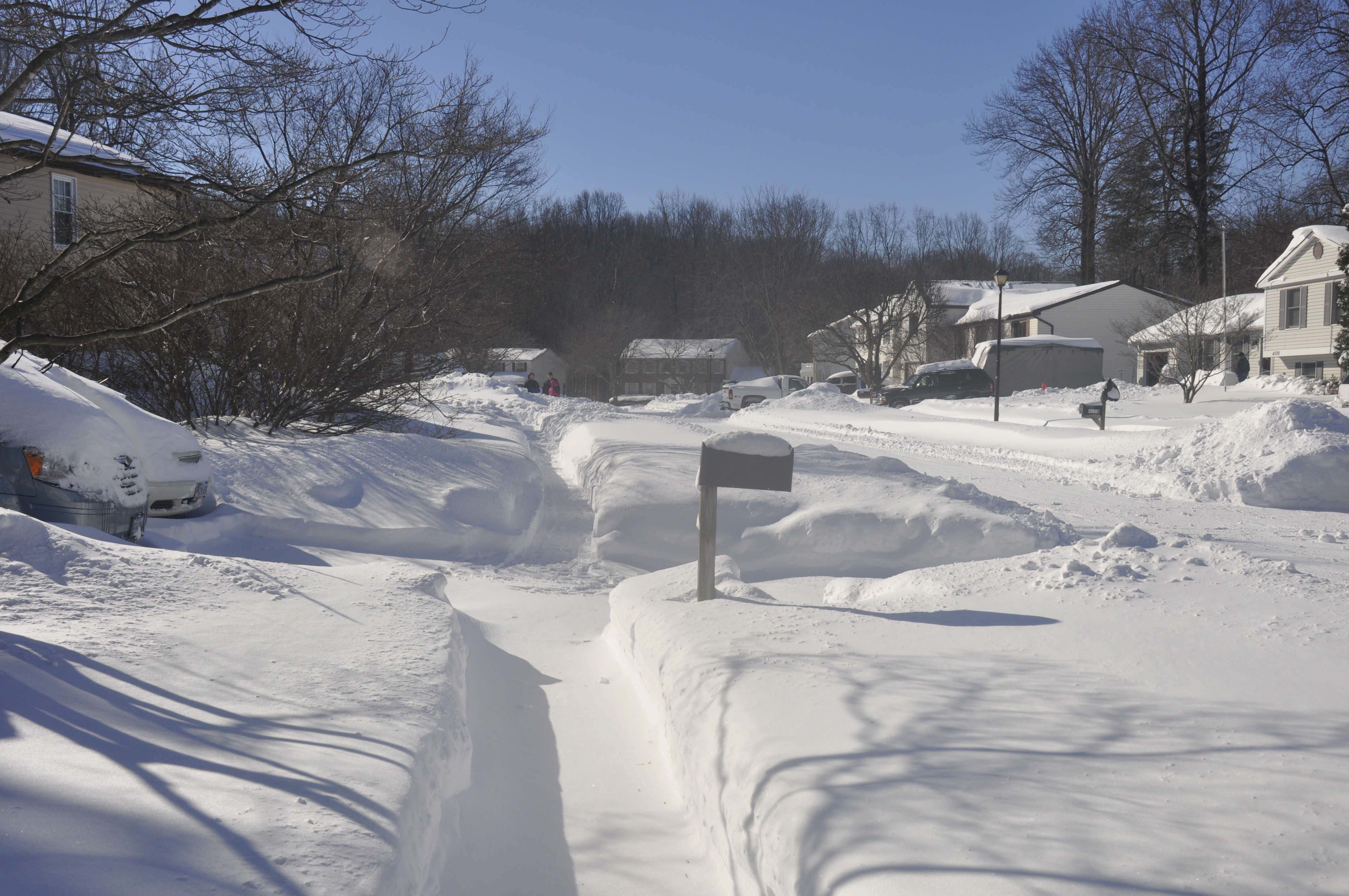 With winter here, it’s never too late to start thinking of ways to keep the home toasty all season long. As the temperature drops below freezing, here is a short list of things you can do to protect your home from the winter’s chill and stop your energy bills from ballooning beyond your budget.
Is it Drafty in Here?
“Improving your home’s insulation and sealing air leaks are the fastest and most cost-effective ways to reduce energy waste and make the most of your energy dollars,” according to the U.S. Department of Energy.
One of the easiest things you can do to prevent air leaks is to place a draft snake at the base of your doors. You can buy one premade or make your own by simply rolling up a towel. Wrapping your windows is also an effective way to stop leaks. All it takes is some heavy-duty clear plastic, which you can buy at your local home improvement store, and a hair dryer.
Is your Furnace in Shape?
While it doesn’t have to run a marathon, it’s important that your heating system is in shape for the long haul of winter. Schedule a tune-up before the temperatures drop and replace your filter once a month.
While you’re thinking furnace, think AC as well. Shut off the air conditioning water valve to prevent excess water from collecting in the equipment.
What about the plumbing?
If you live in a cold climate, your plumbing could be at risk to freeze and thaw (perhaps more than once) during the winter, which can cause pipes to burst.
Weatherproofing your plumbing is always a good idea. To do so, turn off the water supply to outdoor spigots, sprinkler systems, swamp coolers and AC units then drain them. If your AC or swamp cooler has components outside, make sure to cover them.
Have a pleasant winter
This advice comes from 2-10 HBW which offers the industry’s most comprehensive coverage for homeowners.
Procrastination – the Thief of Time?
 Recently the Harvard Business Review published an article by Chris Bailey on Research Based Strategies for Overcoming Procrastination. The premise of such articles is that procrastination is a bad idea. Whereas there is often a very good case to be made for not making decisions until an appropriate time.
Quite often the answer to many difficult situations which seem to require immediate action is to “Stand and Wait”. The problem might go away. The situation might change. The immediate answer might not be available but may appear after a night’s sleep. As always one should make haste slowly.
Innovation expert Daniel Burrus suggests that to get more done in less time, we should slow down. It may sound counter-intuitive, but doing so allows us to identify issues before they become problems, avoid tunnel vision, and embrace the bigger picture. Attention to the immediate moment can blind us to almost everything else.
Every Child’s Right
 I am always coming across relatively small charities which make a big impact for what they do. I once contributed to a clothing bank for street youth who had been arrested for being idle and who were destined to receive harsher sentences compared to those who seemed respectably turned out.
I experienced a similar epiphany last week when the Diaper Bank of NC came to my attention.
There is a serious shortage of diapers and other personal sanitary items among the poor in North Carolina. Diapers can cost as much as $100 a month per child and are not covered by SNAP (also known as food stamps) or the Special Supplemental Nutrition Program for Women, Infants, and Children – better known as the WIC Program).
A recent study in The Journal of Pediatrics found that women in need of diapers reported more difficulty with stress management, depression, and coping with trauma—which negatively affects their child’s health.
Another study conducted by Feeding America, called In Short Supply: American Families Struggle to Secure Everyday Essentials, found that 48% of families who cannot afford basic household necessities delay changing a child’s diaper to make their diaper supply last longer.
All across North Carolina, there are stories of families who are struggling to provide diapers for their children to keep them dry, clean, and healthy. It is not just infants who are affected. Tears come to the eyes when you hear of young girls who cannot afford personal sanitary items and so stay away from school rather than be shamed.
The Diaper Bank of NC is a 501c3 organization. No goods or services are exchanged for donations, which are tax deductible to the fullest extent of the law.
What does $2.3million look like?
 The reports of the $2.3 million missing cash from the Wake County Register of Deeds office raise as many questions as answers. $2.3 million over nine years is an average of $21,000 a month which for some people could be yearly earnings.
Reports tell us the who, what and the how.
We do not know the why or where the money has gone.
As a former Bank Chief Inspector I would always look for motivation in gambling, drugs and extra marital dalliances. Where has all the money gone? It can’t all have gone on riotous lifestyles? Has it gone to family, colleagues or financing elections? It can’t all have been frittered away, can it?
For more details please see Charlotte Observer of August 28th
Retreat from Glory
 Last week I blogged on the echoes from the 1930’s and the German position after the Versailles and Locarno treaties and the U.K. position and the E.U. at the present time.
The blog was based on the book Retreat from Glory by R.M. Bruce Lockhart.
The Retreat from Glory can be applied in the ironic sense to the EU as it negotiates Brexit. Here I am indebted to Guido Fawkes for the chart.
Well, faced with €12 billion walking out of the door who would not be petulant.
What’s more interesting is that France with an economy and population comparable to ours makes a net contribution less than half of ours.
Why does Italy pay make a net contribution and Greece makes a net withdrawal?
There’s a Ph.D. project in the making as to the relationship of contributions to GNP, who comes out best and why.
But looking to the future there are two questions to be asked: What will we do with the money we no longer pay to Brussels and What will the EU do to fill the hole?
Flogging will continue …

I have just finished reading “Retreat from Glory” by R.H. Bruce Lockhart.
It covers the period of his life from 1918 to 1932. Lockhart first achieved fame as British Vice Consul in Moscow in 1912 and is irretrievably connected with Sidney Reilly the “Ace of Spies”.
The book rambles a fair bit with details of trout fishing in far flung bournes and sight seeing.
Split he describes as a beautiful port and Diocletian as the first man to discover the peaceful solitude of this enchanting (Dalmatian) coast.
Trogir (he writes) is another unspoilt relic of old Venice with the most glorious Venetian square hedged by a loggia, a magnificent cathedral, a palazzo and an old town hall. The dirt and the smell were over powering…
But the real gems in the book are the insights and conversations he has with politicians throughout Eastern Europe in the aftermath of the Versailles Treaty and the determination of the French to ensure that Germany would never rise again to threaten them.
Lockhart recounts a converation with Gustav Stresemann the German politician and statesman who served as Chancellor in 1923 and Foreign Minister 1923–1929. He quotes Stresemann in 1929 as saying “… It is five years since we signed (the Treaty of) Locarno. If you had given me one concession, I could have carried my people. I could still do it today. But you have given nothing and the trifling concessions which you have made have always come too late.” Fast forward nearly ninety years and you could exchange the Locarno Treaty for the Lisbon Treaty, Stresemann’s position for that of David Cameron and the Allied Powers for that of the European Union. Nothing has been learned by the French, Germans and Luxembourgers in fostering joint well being and instead they have entrenched the view that Britain is better off out of a Europe whose motifs seem to include “Floggings will continue until morale improves”.
You Could Not Make it Up – Giving Professionals a Bad Name!
T he new Bank of England deputy governor Charlotte Hogg has warned that Brexit remains a risk to the UK economy, saying it poses the “most significant challenge” to monetary policymakers and could have “upside or downside” effects.
Well, No Sh*t Sherlock!
There’s a blinding glimpse of the obvious!
Note the “Upside or downside” – no Mr In-between, no upside and downside, not a little bit of both just to keep everyone happy but a full a polarity choice.
Meanwhile Ms Hogg, who has not held a policymaking position with the Bank of England before but who has run the operations side of the Bank since 2013, claimed that not being an expert was an advantage. Andrew Tyrie, Tory chairman of the House of Commons Treasury Select Committee, said: “You haven’t got that [policy] experience.” Ms Hogg replied: “I don’t and I think that’s a plus.”
Meanwhile I shall keep my eyes open for the next Bank of England Sits-Vac advertisement –you never know when a lack of expertise will be a real qualification.
Budget Opportunity & Flytippers
 Happy New Year to all my readers.
The new year starts with me being like Private Frazer insofar as it seems that “we are all doomed”. I saw the news yesterday (Daily Mirror and Daily Mail) that councils will be using powers to issue fixed penalty notices of up to £400 and seize and destroy vehicles used by offenders as part of a “zero-tolerance” nationwide initiative on fly-tipping.
How long before a simple case of littering or perhaps a poorly closed dustbin will attract these new powers?
The cost of clearing up fly-tipping in England has reached almost £50m, with councils having to deal with almost 900,000 incidents a year Authorities indicate that, to date, only 40% have made use of powers given by the Government in May to issue on-the-spot fines.
So expect more fines and perhaps more draconian attitudes because fines can fill the holes in the budget. In 2007 Ipswich Borough Council fined a fourteen year old £50 for throwing a chip to a seagull. Despite the gull eating the evidence, the Council insisted upon its powers and even (I recall) pursued the child into his school in order to obtain his identity.
Peterborough Evictions
 Once again local government proves that you do not need to be an imaginative writer to make up true but unbelievable stories.
Last month it was reported that Stef & Philips (a leading provider of social housing solutions in London and the Home Counties) had recently won a contract to provide Peterborough Council with accommodation for people in need.
In order to create the space needed Stef & Philips are evicting 74 families so it can accommodate the homeless.
Six months down the road I can see a situation whereby a Council spokesperson will tell us that the strategy was successful but in the meantime the homeless numbers have increased and Stef & Philips’ contract will be renewed and extended because they have done such a good job!
Not only could you not make it up – but you don’t have to!
 brian riley's blog