 I often hesitate to pick on another politician based upon a single article in a newspaper, but the Daily Telegraph of 20th November reported on an interview given by Lord Porter of Spalding wherein he stated that whilst he is not happy with the six figure salaries enjoyed by council chief executives there is little that can be done…because that is the way the world is! Gary Porter is Baron Porter of Spalding CBE, a British Conservative politician, local government leader and member of the House of Lords.
He is also a South Holland District Councillor and most importantly Chairman of the Local Government Association. He was created Baron Porter of Spalding, of Spalding in the County of Lincolnshire on 15th October 2015.
In the article he draws the comparison with top footballers with whom he is also “not happy” about their being paid a lot of money. But as a person in a leadership position he does have choices. He can choose not to support a football team if he thinks they are over promising and under delivering. A top footballer is expected to thrill millions across the globe and has a limited performing lifetime. And for many people the purpose of top footballers is to be the recipient of gratuitous abuse whether it is appropriate or otherwise. A top footballer is always at risk of career terminating injury. I have yet to see a Council Executive whose brain was overworked in the performance of their duties.
The real test of a Council Executive’s pay is whether the recipient provides added value. I have known a few Council Executives directly and I have yet to discern added value. For the most part they are administrators who do not provide leadership but manage to convince senior elected officials that they have to pay the most to get the best. But we do not always need the best. I would like a Rolls or a Bentley but I happily settle for a VW.
When Babergh was enjoying its executive leadership challenges I suggested that we could emulate the Roman Empire and split the job between the three (at most) next senior executives. They would have to work together towards common goals. They would not need a fourth person to coordinate their actions and give them direction as if they were teenagers. They would however need political direction.
Equally I suggested that they should advertise the post at £80,000 instead of £100,000+ and see what they got. They might have got ambitious candidates with acceptable capabilities, qualifications, experience and vision. Instead the senior councillors (i.e. the political leadership) outsourced their problems to an Executive Search Consultant and the rest is history. There was no challenge and consequently I feel that they ended up overpaying.
And what of Lord Porter? Where is his challenge and leadership? What happened to the man I once met and admired? Has he succumbed to the Sir Humphreys of the Local Government Association?
The evidence is clear enough. One does not need to be in the Third World in order to go native!
Money Matters
Corks Lane
 Last year the Leader of Babergh District Council indicated that the future of Corks Lane would be decided by the post May 2007 administration. As we know, the Conservatives romped home thirty one seats out of forty three thus celebrating being in full control for the first time since 1974.
On 11th May the Leader of the Council was quoted as saying that the new regime would press ahead with a joint review of Babergh’s headquarters in Hadleigh and Mid Suffolk’s in Needham Market.
And then a period of silence ensued until early September when Babergh decided that it would produce:
a plan for our short-term accommodation usage which will be implemented over the next six months that will rationalise the usage of our existing accommodation, build greater integration and co-location of teams across the two sites and develop some “spokes” within our market towns.
an accommodation strategy (and the necessary complementary workforce development strategy) that is cognisant of and flexible enough to reflect emerging local and national policies and public service reforms.
So, where was the driving force? Certainly it doesn’t appear to be in the controlling party. There was no indication of hitting the ground running. After all this deliberation, discussion and decision making, it definitely looks like a case of the mountain belching and bringing forth a mouse.
What’s being overlooked is the potential for saving ₤1,000,000 a year in accommodation costs if Babergh’s and Mid Suffolk’s operations are concentrated in Corks Lane. To ignore such a savings opportunity is disgraceful and not what the residents of Babergh expect and deserve. Are Mid Suffolk resisting the logical conclusion of the full merger which they voted for in 2011?
Or will the devolution of powers into a Suffolk/Norfolk powerhouse result in the District Councils becoming irrelevant and ultimately being disbanded with their powers and responsibilities being absorbed and redistributed elsewhere?
Only time will tell, but I look forward to 2016 when hopefully we will be seeing the plans and strategies and stop asking ourselves what’s taking so long?
Stewards or Leaders
Yesterday’s (6th August) Daily Telegraph contained an above average gem count.  James Quinn in the Business Section reflected on the quality of leadership in a number of companies and classified Chief Executive Officers as “Stewards” or “Leaders”. Stewards as the classification suggests take the organisation forward by managing the existing business. Leaders on the other hand take that existing business and manage it for future challenges. Quinn’s advice is to follow leaders. The classification can also be seen in local government where some political leaders are really stewards (and tend to be bad stewards at that) and see their role as providing political legitimacy for the officers’ wishes. Others provide political leadership and make sure the officers follow the political directions. One can see this in Planning at District Level where the Planning Departments implement their own policies regarding the location of housing, manufacturing and other businesses without due regard to the wishes or the wellbeing of the individual communities they serve. Ambrose Evans-Pritchard provided an analysis of the oil industry. As fast as oil prices fell due to overproduction by Opec, the shale producers (in the U.S.) were able to cut their costs. Whilst the North American rig count has dropped (from 1608 in October to 664), oil production in the U.S. has risen to a 43 year high of 9.6 million barrels per day in June. Elsewhere Allister Heath quotes from John Maynard Keynes’ “Economic Possibilities for our Grandchildren” which predicted that by 2030 humanity would be eight times better off than they were in 1930. There are problems, of course: millions of unskilled workers are finding it much harder to keep up; the well-paid blue-collar jobs of the past no longer exist, and routine service-sector jobs may soon be automated. But to highlight these problems isn’t to condemn capitalism: we need better education strategies to counter low productivity. We also need better monetary policies that don’t cause endless booms and busts. But we mustn’t ignore the lessons of the past and reject capitalism, the greatest poverty alleviation mechanism ever created.
The image was originally posted to Flickr by Aldaron at http://flickr.com/photos/48788766@N00/536332742.
No Sh*t Sherlock
 The week end press reports that following the destruction of parking meters in Cardigan (Wales) high street sales increased.
Marcus Jones, the Government High Streets Minister has suggested that small town centres could become “parking meter-free zones” in an effort to save shops from closure. The Government is growing increasingly concerned that punitive parking costs and fines are deterring shoppers from using their local high streets.
Small stores are going out of business as people increasingly shop online and use supermarkets to avoid parking charges.
At last the penny has dropped, people prefer the free parking at supermarkets to paying for parking at Council car park sites. Hadleigh High Street is a good example where parking at Morrison’s is simple and free whereas when one uses the Co-op and the Council car park you have to get a free ticket to show your latest permitted time of departure.
And yet, even as late as last year, a senior Babergh District Conservative Councillor told me that parking charges would have to go up in 2016/17 because of budget gaps. These are the people for whom there can never be enough evidence to overturn an entrenched view.
Where is the application of the Primum non nocere principle which means “first, do no harm?” In practical Local Government governance this means that it may be better not to do something, or even to do nothing, than to risk causing more harm than good.
Ministers have warned, “The law clearly states that parking fines should not be used as a way of generating revenue.” The Department for Communities and Local Government has advised that any local authority found to be using parking fines as a way to make money could face reduced levels of government funding.
(Of course parking fines and parking charges are two different things, so I do not rule out Babergh bringing in short term car parking charges in the belief that this time it will all be different!)
More details can be found on http://www.telegraph.co.uk/news/society/11747831/Free-parking-in-town-centres-to-save-the-high-street.html
Smartphone Parking Payment Systems
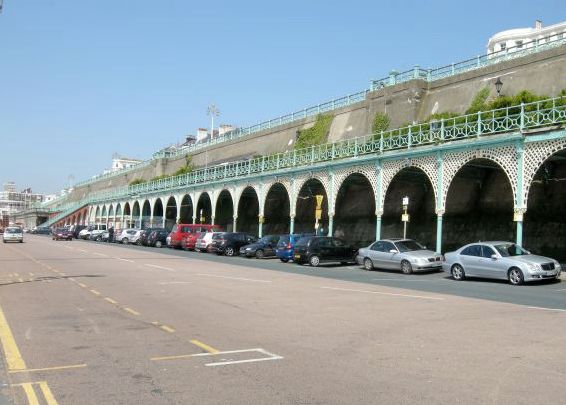 The Daily Mail reports that although Brighton Council has arranged lessons in local libraries to teach residents how to use the new smart phone parking payment system it does nothing to help out-of-town visitors.
Hence at least one visitor chooses to go elsewhere since if people need lessons in how to use a parking meter there is probably something wrong with the whole procedure.
Hadleigh has various car parking facilities, one of which (off Bridge Street by Corks Lane) is available for public use but not posted as such. Another car park has a two tier system whereby even short stay users can stay free of charge in the long term parking provided an appropriate ticket is obtained and displayed. As least one senior councillor has purchased a long term ticket for a short term stay as he found the system confusing.
If Hadleigh had a simpler system would more people visit the town and would those who do visit have a happier experience.
The photo is taken from https://aseasyasridingabike.wordpress.com/2012/05/24/brighton-weather-and-parking-charges/ which contains some interesting views on Brighton’s parking issues.
Treasury Management and Pies in the Sky
 On Monday I attended a meeting of the Babergh & Mid Suffolk District Councils’ Joint Audit and Standards Committee where the main item on the agenda was the Joint Treasury Management Strategy for 2015/2016. Having established the criteria for choosing counter parties at the last meeting I thought that this strategy paper would be a gentle formality. But as always when you think it’s all under control the land mines and elephant traps start appearing. Page 3 of the strategy paper advises that included in the future borrowing requirements is £25 million relating to delivery plan projects. Any use of this borrowing will be subject to a business case and will achieve a return on that investment and produce additional income to help towards the council’s medium term funding gap.
So much for fine words but further on page 33 indicates that borrowing costs as a percentage of General Fund (income) will rise to 32.74% in 2016/2017 and to 35.07% in 2017/18. When asked why we looked as though we were committing over a third of our income to debt servicing costs – we were told that projects has not yet been identified and that the inclusion of the costs were merely being prudential. Except that we were being asked to approve this situation and as any fule noes such a level of debt servicing can only mean a reduction in services or a culling of staff or both. We declined to approved the strategy without serious amendment and reservations.
I went to bed asking myself what sort of project would it be that would have a long initial period of no income. And then I woke with the answer – a very nice new headquarters could quite easily soak up £25 million with the borrowing being repaid from the proceeds of sale of the existing and consequently redundant buildings.
Not that the District has a happy history of business cases coming to fruition in the manner first proposed and we certainly do not have a good reputation for managing our real estate portfolio.
What’s my next step – let’s see if I can get an unequivocal statement that none of the £25 million is intended for a new headquarters.
Small Business Support and Wider Issues
 Bill Bonner (https://uk-mg5.mail.yahoo.com/neo/launch?.rand=adv3o5nver64d) reports that “Amazon has raised $6 billion in additional financing. Investors readily throw their money into the River of No Returns. At only 100 basis points over Treasury borrowing costs, they worry neither about the return on their money, nor the return of their money. Over on the equity side, investors are even more sans soucis. Nasdaq shows Amazon with a p/e of MINUS 714. After 20 years, the giant marketer has never learned to make a profit. The last quarterly report showed it with losses of about $1 a share, or about $2.50 on every hundred dollars of sales”.
This is the equivalent of a 2½% discount on every purchase.
No wonder small traders and everyone else are hurting.
Paul Kruger wrote interestingly in the New York Times in October about Amazon as a monopsonist – a dominant buyer with the power to push prices down. Please see http://www.nytimes.com/2014/10/20/opinion/paul-krugman-amazons-monopsony-is-not-ok.html?module=Search&mabReward=relbias%3As%2C%7B%222%22%3A%22RI%3A15%22%7D&_r=0
Treasury Matters
Last Monday I achieved a small success.
It was the occasion of the Babergh and Mid Suffolk District Council’s Joint Audit & Standards Committee discussion on the Mid Year Report of Treasury Management 2014/2015.
Normally these meetings are a gentle breeze through the agenda merely noting what has happened and making the odd recommendation – all written and suggested by the officers.
Except that the recommendations included allowing deposits in banks and other organisations whose credit rating was BBB+. Additionally although recent regulatory changes approved by the European Parliament changed the eligibility of certain deposits (for compensation), public sector and financial organisations, remain ineligible for compensation. Anyone responsible for money management knows that in times of difficulty you chase security over yield – and I wasn’t going to let the investment profile move southwards.
Fortunately my view prevailed and the proposal to use BBB+ counterparties was withdrawn.
Which makes one ask, why it was suggested in the first place?
Old Models – Poor Directions
Yesterday’s E.A.D.T., published the following letter:
New council H.Q. in Hadleigh will achieve the most savings
 It’s all very well for the Leader of Babergh District Council to say that it is unlikely for Babergh’s and Mid Suffolk’s headquarters to be based in Hadleigh (EADT 25th October) – but this is precisely the direction indicated by the consultant’s report. Locating the main activities in Hadleigh and disposing of surplus sites and space will achieve a 50% reduction in costs. Relocating activities to the County’s building in Ipswich will achieve savings between 11% and 13%. Putting a new hub in the Ipswich fringe will only yield a 32% saving. The hub and spokes business and governance model is seductively simple but only suitable for banks, building societies and estate agents. It is recipe for senior management to distance themselves from the reality of the everyday lives in the areas they are supposed to be managing and directing. This is not a desirable way forward. Instead, both councils should focus on how value for money can be delivered to the residents because if monies are not spent wisely council taxes will rise.
Yours faithfully,
Brian Riley
District Councillor – Hadleigh North
County Councillor – Hadleigh
So far reaction has been favourable
Your Public Servant
 The Spectator (Coffee House Blend) reports this evening as follows:
David Cameron told colleagues last week that he had been nervous about what sort of a speech Ed Miliband would produce this year. He’d done two very good ones for the past two years which had set the agenda for the autumn, the Prime Minister pointed out. So how was this last conference season before the General Election going to work out? Well, he didn’t need to worry too much about that as the Labour leader gave a poor speech last week and the Prime Minister gave one of his best speeches of his career this afternoon. First, the substance. Cameron announced the following: – The personal tax allowance will rise to £12,500, taking everyone on the minimum wage out of income tax. – The threshold for the 40p rate of income tax will rise to £50,000. – The Conservatives will protect NHS spending in the next Parliament. – Cameron will ‘get what Britain needs’ on freedom of movement (without any definition of what Britain does need). – A Tory government would scrap the Human Rights Act and introduce a British Bill of Rights. The conference liked the bit about the personal allowance (the Lib Dems didn’t, accusing Cameron of being ‘shameless’), but they loved the bit about the 40p. But this wasn’t just a speech aimed at the core, though as James says, it seems to have given them more of an emotional connection to David Cameron than before. It was a speech that tried to tell floating voters that the Tories are now the ones occupying the moral high ground, not Labour. It was angry in parts: Cameron became unusually personal and emotional when he talked about his own experience of taking his son to hospital, turning furiously on Labour to say ‘how dare they suggest I would ever put that at risk for other people’s children?’. And he barely restrained himself from attacking and ridiculing Ed Balls and Ed Miliband, contrasting their pitch for government with his. He was unusually self-deprecating, joking about his verbal slips and the time he left his daughter in a pub. And when he talked about his own leadership, he tried to be humble, saying: ‘I don’t claim to be a perfect leader. But I am your public servant, standing here, wanting to make our country so much better – for your children and mine. I love this country, and I will do my duty by it. We’ve got the track record, the right team…to take this plan for our country and turn it into a plan for you.’ The question is whether the tax cuts and moral high ground-hunting in this speech will be enough. It may well be that voters are more annoyed by George Osborne’s two-year welfare freeze than they are impressed by what David Cameron had to say today. But if conference speeches could win elections…
 brian riley's blog