 Last Sunday we went to Durham (North Carolina) for a presentation to the Durham Democratic Women by Deborah Ross who is running for the U.S. Senate against the Republican incumbent Richard Burr. The talk was a combination of vote for me, get your friends to vote for me and please help me to fund the campaign.
Deborah is a powerful speaker, totally on the ball and so dynamic that she makes my high level political friends in England look as though they have “slow blood”.
The good news is that she is within two points of the incumbent Senator Burr (according to the latest poll released last week by the conservative leaning Civitas Institute).
The now toss-up race follows Ross’ strong first quarter fundraising where she out-raised Senator Burr. The neck-and-neck poll also comes as more and more voters have been learning of Senator Burr’s out-of-touch record in Washington where he voted to cut Social Security, wrote legislation to privatize Medicare, supported cuts to Pell grants and voted to give tax breaks to companies that ship jobs overseas. The bad news is that her election pot is nowhere as large as Senator Burr’s. He has been endorsed by the National Rifle Association and the impression is that is he well supported by his political friends. And this is where we get to more bad news. As Donald Trump becomes the Republican presumptive and unelectable presidential candidate, – so the Republican funding may not go him but to the lesser elected posts like Richard Burr’s and sundry others whose opponents do not have access to funding from the likes of the Koch Brothers.
It will be interesting to see where the contests go – so I can only say watch this space.
Meanwhile Tuesday’s Raleigh News and Observer notes that we have had an unfilled Federal judiciary post since 2006 and Senator Burr is refusing to approve the nomination of a qualified person. To quote the News & Observer: “in opposing the nomination, Burr said he won’t submit the “blue slip” that’s needed from the home state’s senator to get a judicial nomination moving. Burr’s opposition is unfair to the nominee and unfair to the system which is running short of federal judges.
The Senate’s job in reviewing the president’s nominees is to advise and consent, not to pout and obstruct. That behaviour is especially out of line when it comes to qualified nominees to the federal bench. It has been a long-standing custom that even when senators differ philosophically in their views from the president, they recognize his right to place his choices on the judiciary.”
Political – National and other
Meanwhile on Planet Babergh
 I sometimes reflect how life in/on Babergh District Council seems how life might be on a distant planet/country where rules and standards as we know them do not apply.
So I was intrigued to read that on Thursday 16th December the Joint Scrutiny Community are to look at Council Grants and External funding and resolve that the following be the subject of further investigation:
(a) To include the external funding offer in the work of the Grants Review Project to maximise opportunities for our Districts through externals funders and opportunities locally, regionally and nationally.
(b) To research the reduction of our Communities Grant spending from 2017 to 2020 and align internal budgets for non-grant allocations.
(c) To pay the Annual Revenue Grants in interim stages to ensure robust monitoring, evaluation and meeting of strategic priorities. (my italics)
My initial thoughts were that this business was ultra vires. Scrutiny is a reactive committee and does not promote policy – that is the purpose of the Strategy Committee. At a stretch you could say that this activity comes under the role and function heading of “undertaking the Council’s responsibilities in relation to financial governance issues”. But it is a stretch and my earlier point stands, Scrutiny does not promote or formulate policy – that is the purpose of the politicians on other committees.
The paper for discussion on Thursday tells us that grants in Babergh total £419,000. We are not told what the criteria are for successful applications, where the money went, who proposes recipients and who approves the applications.
I get concerned when I see that grants will be paid in interim stages. As a former lending banker I am familiar with stage payments in building projects. These are usually predicated upon surveyors’ certificates and let builders (and bankers) access the credit ratings of the principal parties. There is unlikely to be a valid comparability with District Council grants.
I get concerned when I see that the stage payments are to ensure robust monitoring, evaluation and meeting of strategic priorities. How many extra people do we need to employ to robustly monitor and evaluate? Why can’t we be happy with the ability of the recipients to employ the monies properly? If we are that concerned with the probity and abilities of the applicants, then we do not advance the funds. If we really need to copper bottom the proposals then let the local Councillors recommend the grants and monitor their usage.
I get concerned when I see the Tory party of smaller government being lead by the officers into the bogs of greater bureaucracy. The Joint Scrutiny Committee has no business in this matter at present and it begs the question as to who is giving leadership in Babergh District Council. When none of Babergh’s political parties had overall control, decisions were (in theory) directed by the Political Leaders Group. Since there was no overall control, the executive and officers of the Council felt obliged to provide the leadership that was lacking.
Despite the Conservative Party’s successes of May 2015 that position seems to continue.
Educating Homeless Children
 Politics is said to be the art of the possible. In reality it is really about the use of resources and how best they can serve the community. Raleigh is a prosperous and growing city centred in Wake County, so it was with some surprise that I read in the News and Observer that there are some 2,736 homeless children attending schools or about 3% of the school population. These children face physical, emotional and developmental issues that make receiving an education even more difficult.
According to the Salvation Army of Wake County’s Project CATCH (Community Action Targeting Children Who Are Homeless) program “One in 30 children experiences homelessness. You can go into a Wake County classroom and one child will be homeless, statistically.
They have as many dreams as the child next to them, but they have a harder road. Students need to have their basic needs met before they can learn.
The Wake County school system works to provide housing assistance to homeless families. The school system also tries to help provide clothing to homeless students in addition to bus service, free school meals, first aid and counseling. The district works with 168 community organizations.
One of these is the Haven House Services (http://www.havenhousenc.org) which has been providing comprehensive services to the youth and families of Wake County for over forty years. They came to my attention through my hairdresser’s who are having a food and supplies bank drive – see the needs list attached.
I find two things astonishing. First that we can have so many in need whilst we are in a land of plenty. Secondly that there are 168 community organizations working to alleviate this black spot on our county’s reputation.
This brings me back to resources and their usage. How do we protect and nurture these families and give them the hope of upward social mobility?
Haven House Services requirements.
To read more please go to: http://www.newsobserver.com/news/local/education/article47067030.html
Going Native
 I often hesitate to pick on another politician based upon a single article in a newspaper, but the Daily Telegraph of 20th November reported on an interview given by Lord Porter of Spalding wherein he stated that whilst he is not happy with the six figure salaries enjoyed by council chief executives there is little that can be done…because that is the way the world is! Gary Porter is Baron Porter of Spalding CBE, a British Conservative politician, local government leader and member of the House of Lords.
He is also a South Holland District Councillor and most importantly Chairman of the Local Government Association. He was created Baron Porter of Spalding, of Spalding in the County of Lincolnshire on 15th October 2015.
In the article he draws the comparison with top footballers with whom he is also “not happy” about their being paid a lot of money. But as a person in a leadership position he does have choices. He can choose not to support a football team if he thinks they are over promising and under delivering. A top footballer is expected to thrill millions across the globe and has a limited performing lifetime. And for many people the purpose of top footballers is to be the recipient of gratuitous abuse whether it is appropriate or otherwise. A top footballer is always at risk of career terminating injury. I have yet to see a Council Executive whose brain was overworked in the performance of their duties.
The real test of a Council Executive’s pay is whether the recipient provides added value. I have known a few Council Executives directly and I have yet to discern added value. For the most part they are administrators who do not provide leadership but manage to convince senior elected officials that they have to pay the most to get the best. But we do not always need the best. I would like a Rolls or a Bentley but I happily settle for a VW.
When Babergh was enjoying its executive leadership challenges I suggested that we could emulate the Roman Empire and split the job between the three (at most) next senior executives. They would have to work together towards common goals. They would not need a fourth person to coordinate their actions and give them direction as if they were teenagers. They would however need political direction.
Equally I suggested that they should advertise the post at £80,000 instead of £100,000+ and see what they got. They might have got ambitious candidates with acceptable capabilities, qualifications, experience and vision. Instead the senior councillors (i.e. the political leadership) outsourced their problems to an Executive Search Consultant and the rest is history. There was no challenge and consequently I feel that they ended up overpaying.
And what of Lord Porter? Where is his challenge and leadership? What happened to the man I once met and admired? Has he succumbed to the Sir Humphreys of the Local Government Association?
The evidence is clear enough. One does not need to be in the Third World in order to go native!
Brexit
 Monday’s Daily Telegraph (2nd November) was full of gems. Roger Bootle’s column contained the best arguments I have seen for the Brexit. On past form the EU will continue to stretch its tentacles wider and deeper into every nook and cranny of national life. Hence the costs of its interference will rise substantially. Meanwhile, over time, the EU budget will surely increase. The logic of moving towards a closer union is that the central budget should outrank national ones.
If most of the EU moves towards full fiscal and political union, it will be very uncomfortable for the UK to be inside the EU but outside that bloc. Finally, the EU itself is likely to fall in relative importance in the world.
But if the rest of the world is continuing to grow in importance, the benefits of membership would be proportionally smaller and the costs yet more unnecessary. It is highly likely that there will be a deal which gives the UK special access to the EU markets. We would have freedom to rescind EU laws and regulations – which are estimated to cost several per cent of GDP. We would keep the UK’s net contribution to the EU which is about ₤9bn a year. http://www.telegraph.co.uk/finance/comment/11968813/Three-reasons-why-Britain-needs-Brexit.html
Elsewhere in the Telegraph we are told that Direct CAP payments to Britain will average ₤2.88bn a year from 2014 to 2020 and that without this subsidy many farmers will go bankrupt. But if leaving the EU saves ₤9bn a year, then we can pay for our own food security and not need to have the monies recycled through Brussels.
Education Means Jobs
 Everyone has opinions on education and everyone thinks that their opinions represent the best interests of the community. North Carolina like many other areas is looking for the best value for their revenues and the State legislature (Republican) feels that if it restricts funding, then inefficiencies will be squeezed out of the system by virtue of some form of budget Darwinism. Unfortunately (like many other Government Departments in N.C. and the U.K.) the thinking stops there and that’s when the inexorable law of unintended consequences kicks in.
The major inefficiencies in education derive from:
- Bureaucratic hierarchy and control
- Inflexible structures at the chalk face
- Misdirected resources
Turkeys do not vote for Christmas so we should not expect the school administrative systems to voluntary devise ways of making themselves more efficient and more focused on achieving continually improving results. Given the unfettered ability to make choices the educational administrative system will pick the low hanging fruit and cull school crossing wardens, teaching assistants and catering budgets. Thus there is a focus on budgets and not on community outcomes. This is the lesson learned by Suffolk County Council. Following the wake-up call of being one step off the bottom of County Educational Performance tables we introduced the Raising the Bar initiative in 2013. Just a few years later we are 107th out of 151 in the league tables. Although, this is still not where we want to be, we are going forward because at County level we recognize that you can’t have decent paying jobs unless the educational infrastructure is in place.
Strawberry Risotto Anyone?

Last week’s Spectator contains a review of the book High Dive* which is a fictionalized account of the bombing of Brighton’s Grand Hotel in 1984.
Fictionalised because the book contains a reference to the chef whose signature dish of “Strawberry Risotto topped with Parmegiano Stardust would be enough to make anyone go on hunger strike”
*High Dive is by Jonathan Lee and published by Heinemann
Devolution Opportunities and Threats

Last month, Suffolk County Council received an update on their bid to receive devolved powers from the central government. I was pleased to speak at the meeting adding my contribution to the debate as follows:
Of course we need a devolution of powers away from Whitehall and into the County. But this should not just be a grab for powers. We should also carry our constituents with us and remind ourselves that we are doing this for their benefit and not for ours. In 2011, the people of Babergh were given the choice, merge with Mid Suffolk or continue with some independence and full sovereignty. Fearing an Anschluss from the north, Babergh residents quite rightly eschewed the prospect of a full merger. As one of my constituents told me, “Every merger promises savings but ends up costing more!” If we want to save monies, let’s promote the Town Councils and consign the District Councils to history. That way we wouldn’t have decisions taken for Hadleigh by people who only visited Babergh’s second largest town for meetings. That way Babergh’s Local Plan wouldn’t envisage housing in Sudbury, Great Cornard and Hadleigh with the jobs going to the Ipswich fringe! And that way we would not have the ludicrous situation whereby although Babergh has more homeless than Mid Suffolk the homeless unit is based not in Hadleigh, Sudbury or Great Cornard but in Needham Market. Similarly if we look at the joint venture between Babergh, Ipswich and Mid Suffolk to process Revenues and Benefits we can see that it can only be described as a mitigated success. Three and a half years ago we were promised that it would be a race to the top with best practice migrating throughout the partnership. Prior to its inception it took Babergh 11 days to process new applications. In July this year it was taking 25 days to process new claims – so much for efficiency by joined up working. This is not a model we should be adopting. Let’s also make sure that devolution does not provide an opportunity for our own civil service to expand with jobs that have no interface with their external constituencies (i.e. our residents) but instead let’s continue to look for those services which could be better outsourced or eliminated as unnecessary or as unaffordable luxuries, For example, where is the wisdom in directly employing community psychologists whose achievements are planning and co-ordinating conferences and supporting staff to learn and develop their skills alongside colleagues and service users? How many similar non jobs are there which are filled by very professional, very capable and highly paid people which we could do without on the present basis?
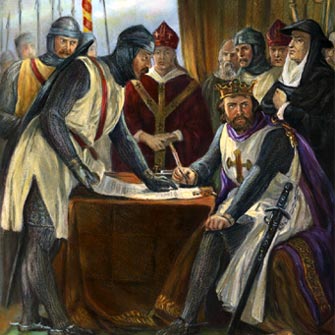
Devolution is not an excuse to increase taxes and impose a heavier yoke of government upon our residents. This is why in 2008 the people of Hadleigh declined to be included within Greater Ipswich a.k.a. North Haven. Instead it is an opportunity for us to change the way the system works. Let us take the powers offered to us and let’s focus on our towns, (the source of our wealth), let them develop at their own pace, encourage them to promote jobs before housing and so let them as a hundred flowers bloom and thrive.
Republican Party Leadership Issues
 The New York Times today reporting on the difficulties being experienced by the Jeb Bush campaign included the following comment:
“I have no feeling for the electorate anymore. It is not responding the way it used to. Their priorities are so different that if I tried to analyze it I’d be making it up.”
JOHN H. SUNUNU, the chief of staff for the first President George Bush, on his confusion with the rise of Donald J. Trump and the struggles of Jeb Bush.
Some of the readers’ comments suggest that the G.O.P. leadership is out of touch with the voters. But I think it is more complicated than that. Donald Trump articulates the wisdom of the saloon bar. Simple answers to complex questions. One question for 2016 is: will Trump have the organization to get out the vote? There are other questions of course, but they are for another post
Stewards or Leaders
Yesterday’s (6th August) Daily Telegraph contained an above average gem count.  James Quinn in the Business Section reflected on the quality of leadership in a number of companies and classified Chief Executive Officers as “Stewards” or “Leaders”. Stewards as the classification suggests take the organisation forward by managing the existing business. Leaders on the other hand take that existing business and manage it for future challenges. Quinn’s advice is to follow leaders. The classification can also be seen in local government where some political leaders are really stewards (and tend to be bad stewards at that) and see their role as providing political legitimacy for the officers’ wishes. Others provide political leadership and make sure the officers follow the political directions. One can see this in Planning at District Level where the Planning Departments implement their own policies regarding the location of housing, manufacturing and other businesses without due regard to the wishes or the wellbeing of the individual communities they serve. Ambrose Evans-Pritchard provided an analysis of the oil industry. As fast as oil prices fell due to overproduction by Opec, the shale producers (in the U.S.) were able to cut their costs. Whilst the North American rig count has dropped (from 1608 in October to 664), oil production in the U.S. has risen to a 43 year high of 9.6 million barrels per day in June. Elsewhere Allister Heath quotes from John Maynard Keynes’ “Economic Possibilities for our Grandchildren” which predicted that by 2030 humanity would be eight times better off than they were in 1930. There are problems, of course: millions of unskilled workers are finding it much harder to keep up; the well-paid blue-collar jobs of the past no longer exist, and routine service-sector jobs may soon be automated. But to highlight these problems isn’t to condemn capitalism: we need better education strategies to counter low productivity. We also need better monetary policies that don’t cause endless booms and busts. But we mustn’t ignore the lessons of the past and reject capitalism, the greatest poverty alleviation mechanism ever created.
The image was originally posted to Flickr by Aldaron at http://flickr.com/photos/48788766@N00/536332742.
 brian riley's blog