“Population is key . If you don’t take care of population, schools can’t cope, hospitals can’t cope, there’s not enough housing – there’s nothing you can do to have economic development.”
Peter Ogunjuyigbe, a demographer in Nigeria, where women have an average of more than five children. The quote is taken from the New York Times today. However the message is true whether you are talking about Hadleigh, Babergh or the world at large. It’s all about housing, jobs and infrastructure and the driver is population. Otherwise we open the doors to the four horsemen of the Apocalypse.
http://www.nytimes.com/2012/04/15/world/africa/in-nigeria-a-preview-of-an-overcrowded-planet.html?nl=todaysheadlines&emc=edit_th_20120415
Quotation of the day
Episcopalian’s Guide to Airport Security
 Today’s Daily Reckoning (e-mail publication by Moneyweek) contains an article by Bill Bonner first published on 3 June 2002 discussing airport security and from there to why the policy of attacking enemies first tends to be flawed.
Historically Bonner refers to Napoleon and Hitler but the sub text is Iraq. The article is (as usual) well written and contains the following gem:
common sense finds few buyers… while absurdity is over – subscribed.
The full article is found on http://www.moneyweek.com/news-and-charts/economics/us/bill-bonner-the-episcopalians-guide-to-airport-security-21400
Touched by Angels
 I have just finished reading Touched by Angels written by Derek Jameson in 1988. Jameson began life as an illegitimate in Hackney (East London) in 1929, was educated at very basic schools and started work at the age of 14 (as many did) as a messenger in Fleet Street (Reuters).
He ultimately became editor and managing editor of many popular newspapers including the (now defunct) News of the World. In 1984 he lost a slander case against the BBC who referred to him as “an East End boy made bad”. The phrase was considered defamatory but also fair comment (and therefore) not actionable. Jameson was bankrupted with the £75,000 total costs of the action.
The autobiography is summed up by Jameson’s own words: “It is really the story of a fight for survival. What makes Jameson run is not a desire to lie on the beach in Bermuda nor drive a Rolls. Rather to make people aware of my existence, to be considered as good as the next”
And that for the most part defines us all.
Not the Whole Truth (2)
Not  all cardinals have spotless reputations. “Not the Whole Truth” (1971) the partial autobiography of Cardinal John Heenan contains the following vignette:
“One of our escapades (invariably leading to an official complaint to the school) was to change compartments (of the train) between stations. This involved climbing out of our compartments and walking along the footboards. It can be dangerous even to lean out of a window…We foolish boys were unaware of the potential suicidal aspect of our exploits – misadventure is never very far from youthful adventures. We were delighted to shock the adult passengers. We were not malicious. It was only that we were too immature to appreciate that it was not very clever to alarm our elders.”
Not the Whole Truth
I re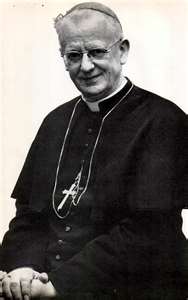 cently read “Not the Whole Truth” (1971) the autobiography of Cardinal John Heenan up to the point when he was made Bishop of Leeds in 1951. In many ways it is a book with bits worth skipping. On the other hand he did visit Russia and Germany prior to 1939. (In both cases travelling incognito). An interesting extract relative to the current debates as to whether England is a secular or a religious society is as follows:
“When Mr Butler (1941 President of the Board of Education) began to outline a new education bill (which became the Education Act 1944) it was obvious that the Government intended to give religion a more prominent place in the curriculum. It is impossible to be certain of other people’s motives but I think the politicians were genuinely alarmed by the paganism of Nazi Germany and felt that the British as Christian crusaders should teach young citizens more about Christianity…That is why in the new Act it was proposed to include a daily act of worship and an agreed (non-denominational) syllabus of religious instruction.”
My Part of the River
I hav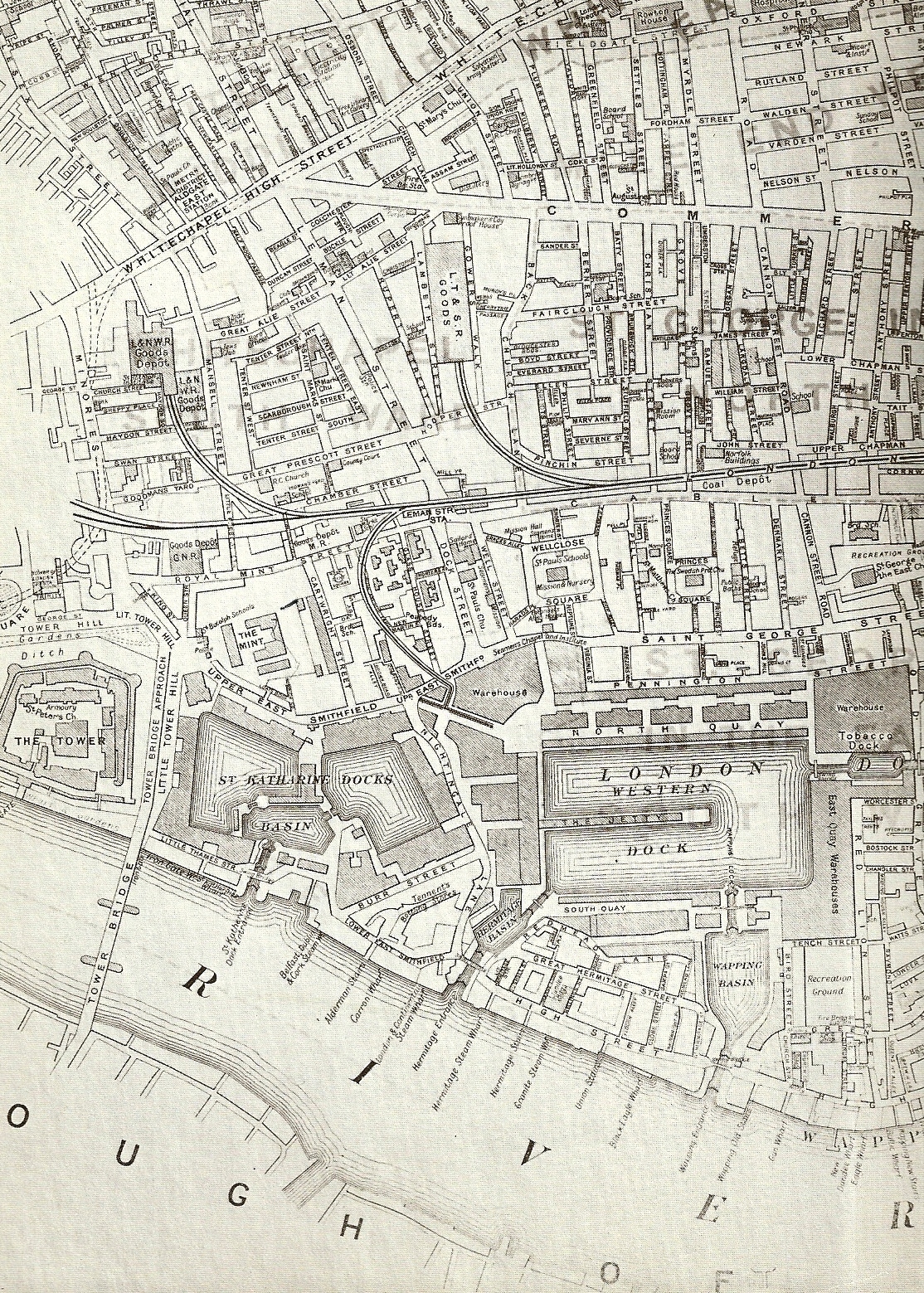 e just finished reading My Part of the River (1974) by Grace Foakes which deals with much of her childhood and early adulthood in Wapping (East London). Grace Foakes was born the year Queen Victoria died (1901) and would thus have been ten years younger than my grandmother (Alice Luck) – so much of what Grace writes has family resonances. One quotation which sticks out is: “They were happy days in that close-knit community. The feeling of belonging outclassed everything else. There was poverty, disease, dirt and ignorance, and yet to feel one belonged outweighed all else.”
Chocolate Wars
 http://www.spectator.co.uk/alexmassie/ and others are enjoying a political non-spat between Ed Miliband (of the new/old Labour) and David Cameron (current Prime Minister). Typical is: Political exchanges don’t come much more important than this – Ed Miliband has picked a fight with David Cameron over cheap chocolate.
In an interview for Parliament’s magazine The House, Miliband has taken umbrage with a pre-election complaint made by Cameron in 2006 about the problem of cut price chocolate orange bars taking the place of real fruit in WH Smith’s, to the detriment of the nation’s health. It was used as an example of irresponsible capitalism as Britain faced an obesity crisis.
“Look, if he can’t sort out the chocolate orange, he’s not going to be sort out the train companies, the energy companies, the banks, is he?” Miliband said in the interview.
He has a point – I would love (not) to have a Prime Minister who delays encouraging the EU to sort out the Euro worries without destroying the world economy to pick off a personal irritant. Wouldn’t we all like to zap the people who annoy us? Or as Alex Massie puts it: Let me suggest that a man who thinks this – will not consider any aspect of your lives beyond the proper interfering purview of government.
It’s rather like in the old days when I was working in Zambia. You needed Bank of Uganda permission to export dead animal parts derived from hunting. One document I liked to see was the Certificate of Non Endangered Species. Of course no one told the poor (now deceased) rhinoceros of that!
It makes the Paris Bourse look like a parish council
An open letter to German Chancellor Angela Merkel (Published in the Express – see below for a link to the original and the comments).
Tuesday December 13,2011
By Frederick Forsyth Dear Madame Chancellor,
Permit me to begin this letter with a brief description of my knowledge of, and affection for, your country.
I first came to Germany as a boy student aged 13 in 1952, two years before you were born. After three extended vacations with German families who spoke no English. I found at the age of 16, and to my pleasure, that I could pass for German among Germans.In my 20s I was posted as a foreign correspondent to East Germany. in 1963, when you would have been a schoolgirl, just north of East Berlin where I lived.
I know Germany, Frau Merkel, from the alleys of Hamburg to the spires of Dresden, from the Rhine to the Oder, from the bleak Baltic coast to the snows of the Bavarian Alps I say this only to show you that I am neither ignoramus nor enemy.
I also had occasion in those years to visit the many thousands of my countrymen who held the line of the Elbe against 50,000 Soviet main battle tanks and thus kept Germany free to recover, modernise and prosper at no defence cost to herself. And from inside the Cold War I saw our decades of effort to defeat the Soviet empire and set your East Germany free.
I was therefore disappointed last Friday to see you take the part of a small and vindictive Frenchman in what can only be seen as a targeted attack on the land of my fathers.
We both know that every country has at least one aspect of its society or economy that is so crucial, so vital that it simply cannot be conceded. For Germany it is surely your automotive sector, your car industry. Any foreign-sourced measure to target German cars and render them unsaleable would have to be opposed to veto point by a German chancellor.
For France it is the agricultural sector. For more than 50 years members of the EU have been taxed under the terms of the Common Agricultural Policy in order to subsidise France ‘s agriculture. Indeed, the CAP has been the cornerstone of every EU budget since the first day. Attack it and France fights back.
 For us the crucial corner of our economy is the financial services industry. Although parts of it exist all over the country it is concentrated in that part of London known, even internationally, as “The City”.It is not just a few greedy bankers; we both have those, but the City is far more. It is indeed a vast banking agglomeration of more banks than anywhere else in the world.
But that is the tip of the iceberg. Also in the City is the world’s greatest concentration of insurance companies. Add to that the brokers, traders in stocks and shares worldwide, second only, and then maybe not, to Wall Street. But it is not just stocks. The City is also home to the exchanges of gold and precious metals, diamonds, base metals, commodities, futures, derivatives, coffee, cocoa… the list goes on and on. And it does not yet touch upon shipping, aviation, fuels, energy, textiles… enough.
Suffice to say the City is the biggest and busiest marketplace in the world. It makes the Paris Bourse look like a parish council set against the United Nations and even dwarfs your Frankfurt many times.
That, surely, is the point of what happened in Brussels. The French wish to wreck it and you seem to have agreed. Its contribution to the British economy is not simply useful nor even merely valuable. It is absolutely crucial. The financial services industry contributes 10 per cent of our Gross Domestic Product and 17.5 per cent of our taxation revenue. A direct and targeted attack on the City is an attack on my country. But that, although devised in Paris, is what you have chosen to support. You seem to have decided that Britain is once again Germany’s enemy, a situation that has not existed since 1945. I deeply regret this but the choice was yours and entirely yours. The Transaction Tax or Tobin Tax, you reserve the right to impose, would not even generate money for Brussels. It would simply lead to massive emigration from London to other havens. Long ago it was necessary to live in a city to trade in it. In the days when deals can flash across the world in a nano-second all a major brokerage needs is a suite of rooms, computers, telephones and the talent of the young people barking offers and agreements down the phone. Such a suite of rooms could be in Berne, Thun, Zurich or even Singapore. Under your Tobin Tax tens of thousands would leave London. This would not help Brussels, it would simply help destroy the British economy. Your conference did not even save the Euro. Permit me a few home truths about it.
The euro is a Franco-German construct. It was a German chancellor (Kohl) who ordered a German banker (Karl Otto Pohl) to get together with a French civil servant (Delors) on the orders of a French president (Mitterrand) and create a common currency. Which they did. It was a flawed construct. Like a ship with a twisted hull it might float in calm water but if it ever hit a force eight it would probably founder. Even then it might have worked for it was launched with a manual of rules, the Growth And Stability Pact. If the terms of that book of rules had been complied with the Good Ship Euro might have survived. But compliance was entrusted to the European Central Bank which catastrophically failed to insist on that compliance. Rules governing the growing of cucumbers are more zealously enforced. This was an European Bank in a German city under a French president and it failed in its primary, even its sole, duty. This had everything to do with France and Germany and nothing whatever to do with Britain. Yet in Brussels last week the EU pack seemed intent only on venting its spleen on the country that wisely refused to abolish its pound. You did not even address yourselves to saving the Euro but only to seeking a way to ensure it might work in some future time. But the Euro will not be saved. It is crumbling now. And since you have now turned against my country, from this side of the Channel, Madame Chancellor, one can only say of the euro: YOU MADE IT, YOU MEND IT.
The full article (and the comments) may be found on http://www.express.co.uk/ourcomments/view/289553/Frederick-ForsythAn-open-letter-to-German-Chancellor-Angela-MerkelAn-open-letter-to-German-Chancellor-Angela-MerkelAn-open-letter-to-German-Chancellor-Angela-Merkel
Where are we going?
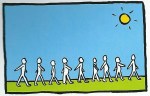
Where are we going?
“I don’t know. I thought you knew”
“No, I don’t know,
Maybe he knows”
“No, he definitely doesn’t know”
PAUSE
“Maybe no-one knows”
PAUSE
“Oh well, I hope it’s nice when we get there”– Edward Monkton
Which sums up a lot of my life, especially when I have to suffer other people’s leadership.
O tempora o mores
Yesterday’s Times contained the following letter:
Sir,
We recently heard a teenage waitress instructing a new recruit:
”When you press this key on the till, it tells you how much change to give. Otherwise you just have to guess”
 brian riley's blog