 Yesterday evening the Executive Council of the South Suffolk Conservative Association (SSCA) met and voted not to re-adopt Tim Yeo as our candidate for the 2015 general election.
Tim has represented the seat, which covers much of the Babergh district, for 30 years and is an effective and hard-working MP. He is a very good constituency M.P. and has never shrunk from offering his assistance to the people of Hadleigh when he has been approached with their problems.
At the last general election in 2010 he received 24,500 votes – a 47.75% share.
I am not a member of the Executive Council. I was consulted on deselection in mid September and made my views known.
Last week I wrote to Tim as follows:
“It was with joy that I read that the Committee on Standards had cleared you on all counts of any breach of the MP’s Code of Conduct.
I’ve had no problems in reminding my constituents and colleagues that you have always been of assistance not only to myself but also to anyone who has contacted you with problems”
This letter was read out last night – alas to little effect.
Tim’s reply to my letter is attached Yeo T 131127 fm
It will be a sad day if we lose him as our M.P. We have eighteen months until the general election. That is far too short to select and embed a new candidate. Many of Tim’s 24,500 votes are personal and may not be easily transferred to the new person.
Meanwhile we have UKIP snapping at our heels and everyone else is make hay at our expense.
It’s time to support Tim. If you agree with the Executive Council then you need do nothing. If you think that Tim’s deselection is not a good idea, I suggest you email Toby Kramers, Chairman of the SSCA Executive Council. He can be emailed via Peter Burgoyne (the political agent) at peter@ss-ca.org.uk
Political – National and other
No Slouch When it Comes to the Cheeseboard.”
 Damian Thompson rarely fails to produce an informed smile on Saturday mornings. Here is an extract from yesterday’s column in the Daily Telegraph:
How fascinating to learn yesterday that the health-conscious President Sarkozy of France took cheese off the menu while he was in office – “except when Angela Merkel was in town”, according to his head chef. This doesn’t strain credulity, I think we can agree. Mrs Merkel looks to me like an extremely determined cheese-eater; I can picture the glint of excitement in her eye as she digs into a ripe Elysée Camembert. She’s partial to British cheese, too. “You should have seen her scoop into the Stilton when she visited No 10,” says my Downing Street source. “It was like a JCB. Even the PM was impressed – and, believe me, he’s no slouch when it comes to the cheeseboard.”
The full column can be found on:http://blogs.telegraph.co.uk/news/damianthompson/100242123/first-they-came-for-the-scientologists/
Syria needs liberal capitalism, not missiles
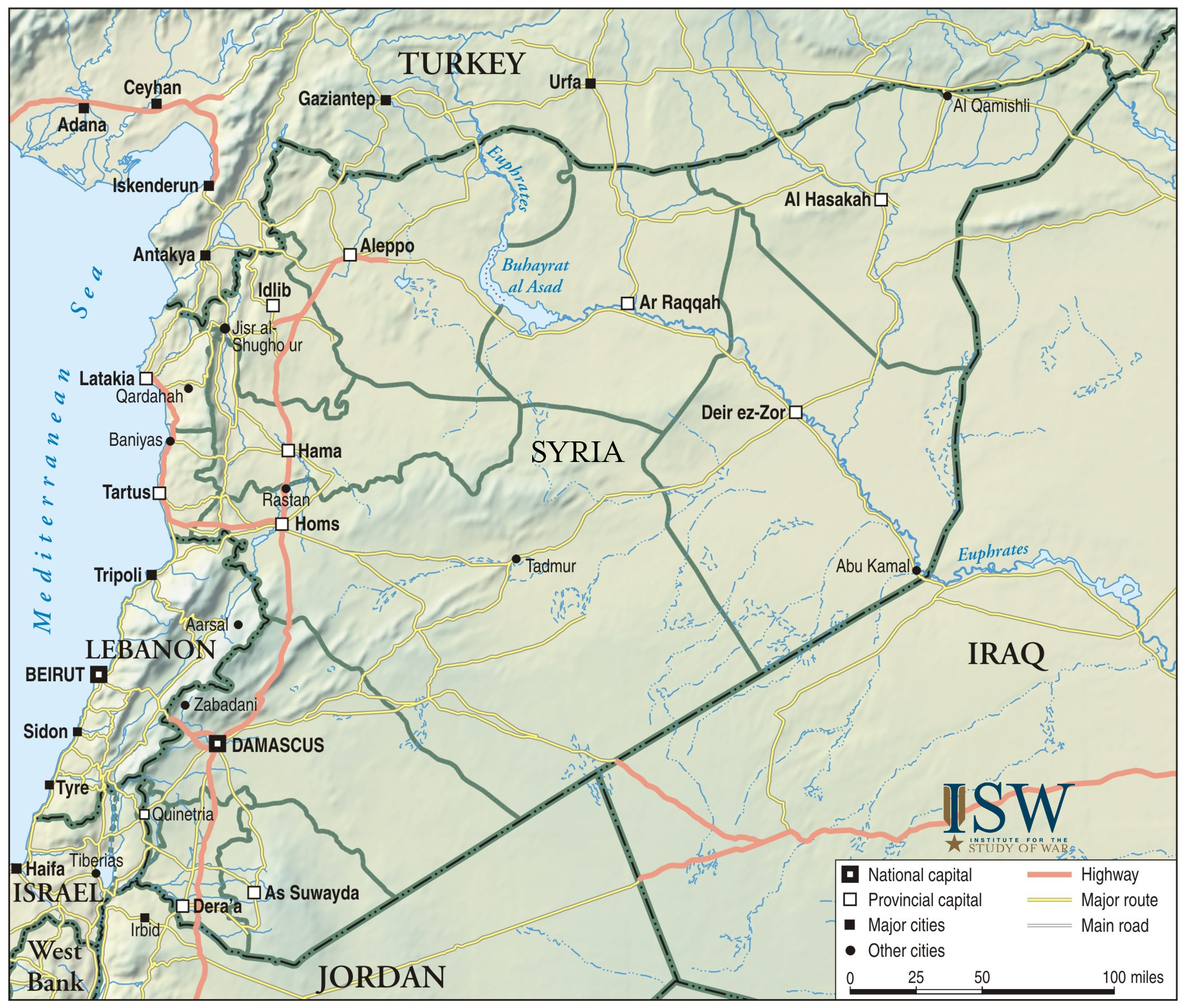 Today’s Telegraph (Business Section) contains a fascinating article by Allister Heath on the Arab Spring debacle and now Syria’s civil war. The article starts …
Abstract ideas matter, of course, but economic forces are usually central to the violent upheavals that regularly tear apart human societies. Sometimes the economic factors are hidden but mostly they are glaringly obvious, as with the rise of Nazism, which followed the catastrophic Weimar hyperinflation of the 1920s and the German economic crisis of 1931.
The economic backdrop to the Arab Spring debacle and now Syria’s barbaric civil war is equally self-evident. With only a small number of exceptions, states in the region have long specialised in economic failure of the most abject kind, seemingly competing to become the most shocking case study in how to squander oil money, ruin a nation’s economy and keep ordinary people impoverished.
Syria’s GDP per person is just $3,289 (£2,122) a year, an abysmally low number; it is no coincidence that it is almost identical to Egypt’s, another country where a small ruling class has mastered the art of kleptocratic exploitation. Add to that a despotic political system, high and rising food prices, a youthful population with little hope of fulfilling its dreams – including many underemployed graduates – and well-organised extremist movements and you get a predictably explosive cocktail.
The article concludes…
The only answer is a complete economic, political and cultural transformation, including an embrace of a real, liberal capitalism, the dismantling of monopolies, a bonfire of privileges and the introduction of genuine pluralism and constitutionally limited government. None of this tells us definitively whether the West should intervene in Syria or not but it certainly confirms that merely lobbing a few missiles at the regime won’t be enough to make a real difference.
The full article may be found on
http://www.telegraph.co.uk/finance/economics/10284077/Syria-needs-liberal-capitalism-not-missiles.html
There is no question
 to which the answer is “We need more Liberal Democrats in the Upper House” (i.e. the House of Lords).
Courtesy Damien Thompson in today’s Daily Telegraph see http://blogs.telegraph.co.uk/news/damianthompson/100229544/the-amish-jews-muslims-and-the-future-of-religion/ for further amplification.
It is the soldier
It is the Soldier, not the minister
Who has given us freedom of religion.
It is the Soldier, not the reporter
Who has given us freedom of the press.
It is the Soldier, not the poet
Who has given us freedom of speech.
It is the Soldier, not the campus organizer
Who has given us freedom to protest.
It is the Soldier, not the lawyer
Who has given us the right to a fair trial.
It is the Soldier, not the politician
Who has given us the right to vote.
It is the Soldier who salutes the flag,
Who serves beneath the flag,
And whose coffin is draped by the flag,
Who allows the protester to burn the flag.
— (c) Charles Michael Province, U.S. Army

Amazon Again

The Daily Telegraph on 21st May had some cogent comment on the Amazon lack of taxes paid in the U.K . debate.
The article begins:
The criticism, of Google, Amazon and even Marks & Spencer for seemingly trying to lower their corporation tax payments threatens to take the focus away from the real tax issue in retail – business rates.
For all the focus on how little Amazon pays in corporation tax, it is how little they pay in business rates that is really hurting the high street Their business rate bill is negligible while Home Retail Group, the owner of high street rival Argos, pays £140m.
There is no complex tax avoidance scheme by Amazon to avoid paying business rates, their low payment is simply because they have little physical presence as a business compared to the 700 high street stores of Argos.
Therefore, if the Government is serious about making online companies pay taxes and also about saving the high street it must focus on revamping business rates.
One of the reasons Amazon appears to pay little corporation tax is that its profit margins are wafer thin, reflecting the fact that online retailing is not yet as. profitable as high-street retailing. In 2012, for example, the company posted a global operating profit of $676m (£444m) on sales of $61.lbn; That is a profit margin of just 1.1 p.c.
However, business rates have no relation to profitability – they are simply measured by the rentable value of a commercial property and inflation. This means that struggling high street’ retailers have been spending millions on business rates while start-up online retailers have been free of the tax. This imbalance threatens to distort the future of the retail industry.
The full article is enclosed as a PDF Freeze on Business Rates (since the on line version has been truncated).
Waking Up and Smelling the Coffee
 Despite my previous promise to myself I have used Starbucks recently.
But in mitigation, there was no room in the nearby Costa.
For me. this is now the Starbucks’ advantage – they are the second choice.
Meanwhile Starbucks seem to be infected by the big girl’s blouse syndrome*
On the 26th January The Telegraph reported that Kris Engskov, the multinational’s UK managing director, demanded talks at Downing Street after the Prime Minister had said that tax-avoiding companies had to “wake up and smell the coffee”. Mr Cameron’s use of the phrase at the World Economic Forum in Switzerland was taken as a direct attack on Starbucks which has been criticised for not paying corporation tax in Britain.
(As if wake up and smell the coffee would make one think immediately of Starbucks – when did they copyright the words?)
Mr Engskov was so concerned about the “politicisation” of the tax issue that he asked for the talks at No 10, where he met officials last Friday.
Starbucks argues that it makes no profits in the UK and so is not required to pay the tax. The business turnover for the U.K. is not disclosed but if it is not making any profits why was it thinking of investing £100 million in new UK branches and why are sources close to the business saying that plans could be put on hold. Could the lack of confidence have anything to do with declining footfall and fortunes?
Meanwhile, whilst Starbucks are rattling their sabres, Lavazza have announced ambitious plans to open as many as 400 shops over the next decade.
*From “he’s flapping like a big girl’s blouse”, which conjures up the twin ideas of a large garment flapping on a washing line and of a man flapping in the sense of panicking.
Jargon Generator
 The Economic Jargon Generator (http://www.dack.com/web/bullshit.html) is a joke page meshing triple vocabulary elements to produce high falutin’ expressions defined as always to baffle the brains of the recipient. Which is why I tell myself that the five/six most important words a politician can say are: “I don’t understand, please explain”. One of my New Year resolutions will be to try to avoid being accused of using the jargon generator. Now that is a fundamentally irrevocable undertaking!
Taxing Councils
Yesterday’s Daily Telegraph contained an interesting piece on the effect of the cuts to Council funding. The newspaper states that “It is a sign of how bloated local government had become that councils have shed 230,000 jobs without hitting front-line services”. Of course front line services have been hit but not in ways which significantly impinge on the services people receive. Standards have been eased but not sufficiently to cause complaints. At the yesterday evening’s Town Council meeting I was asked if the Babergh District Council staff were having to apply for their own jobs. I weaselled out of by saying that whilst I didn’t have any details it would follow that as we amalgamated services we should be able to do so with a lesser number of staff. Consequently people were not applying for their own jobs but for new jobs under the new regime. As night follows day there would be winners and losers. The keys to success were that the right people were chosen for the new posts– not necessarily those who could do the talk but those able to walk the walk. The other issue was that people who no longer had a job were treated fairly to ease the transition to the next phase of their lives – (e.g. statutory redundancy payments are enhanced by 50%). Times change and there is no iron rice bowl anywhere any more. The full piece can be found on http://www.telegraph.co.uk/comment/telegraph-view/9755916/Taxing-councils.html
Looking for a Home
This week’s The Tablet http://www.thetablet.co.uk/blogs/373/17 contains an interesting discussion on the possible discovery of  Richard III’s bones under a car park in Leicestershire and their subsequent reinterring. One would have thought that finding and authenticating the bones would be the end of things. But No! The Tablet highlights the arguments as to where to re-inter the bones. In Westminster Abbey (because he was a king), in Westminster Cathedral because he was Catholic (the national religion at the time), Leicester Cathedral because the current location of the bones is within its diocesan boundaries or a Franciscan friary in Nottingham because that is the nearest to the excavation.
Meanwhile the country is still split three ways as to the appropriateness of Richard’s reputation.
Some think that it is well deserved. Others feel that he was traduced by supporters of the Tudor usurpers (i.e. Shakespeare) and other (of course) are not bothered either way.
During Richard’s reign, the historian John Rous praised him as a “good lord” who punished “oppressors of the commons”. After his death, Richard’s image was blackened by his Tudor successors, culminating in the famous portrayal of him in Shakespeare’s play Richard III as a physically deformed Machiavellian villain who cheerfully commits numerous murders in order to claw his way to power. I’m beginning to understand why I once was a member of the Richard III Society.
The Society’s home page (http://www.richardiii.net/) includes the following quotation “”… the purpose and indeed the strength of the Richard III Society derive from the belief that the truth is more powerful than lies – a faith that even after all these centuries the truth is important. It is proof of our sense of civilised values that something as esoteric and as fragile as reputation is worth campaigning for.” – HRH Prince Richard, Duke of Gloucester, KG GCVO
 brian riley's blog